
What Is B.AI? Justin Sun AI Relay Station for Claude and GPT


The AI subscription treadmill is spinning out of control. Anthropic released Claude Opus 4.7 on April 16, 2026, OpenAI shipped GPT-5.5 on April 23, and DeepSeek dropped V4 on April 24. Each launch makes yesterday subscription a sunk cost. This fatigue has fueled AI relay stations promising one API key for every model, yet most suffer from opaque routing, data harvesting, and downgrade scams.
B.AI, the blockchain-native AI relay station from TRON founder Justin Sun, solves this by offering anonymous, crypto-settled access to Claude, GPT, Gemini, and other LLMs via one API. It is not merely an aggregator. B.AI is economic infrastructure for autonomous AI agents, granting on-chain identities and programmable wallets for autonomous hiring, payment, and collaboration.
If you are new to cryptocurrency and need a reliable platform to buy TRX, USDT, or other digital assets to participate in ecosystems like B.AI, sign up on WEEX to get started. WEEX offers a secure, user-friendly environment for buying and trading crypto with low fees.
What Is B.AI
B.AI (AI Relay Station) is a concept centered on “multi-model collaboration.” It is often described as an AI infrastructure vision promoted by Justin Sun, whose core idea is to connect different large language models (such as GPT and Claude) within a unified orchestration layer, rather than relying on a single model. It functions like an “AI relay station” or intelligent router: when a user submits a query, the system does not immediately assign it to a fixed model. Instead, it first analyzes the task type, complexity, and context requirements, and then decides which model is most suitable. For example, tasks requiring long-context understanding or nuanced writing may be better handled by Claude, while tasks involving strong reasoning or code generation may be better suited for GPT. In this way, B.AI aims to combine the strengths of different models to produce more stable and higher-quality outputs than any single model alone.

How B.AI Works
Step 1: User Input
The process begins when a user submits a request, such as:
- “Write an essay”
- “Summarize a document”
- “Solve a coding problem”
At this stage, B.AI simply receives the raw input without assigning it to any specific model yet.
Step 2: Task Analysis
Next, the system analyzes the request to understand its nature. It evaluates factors such as:
- Type of task (writing, coding, reasoning, Q&A, etc.)
- Complexity level
- Required context length or depth of understanding
This step is commonly known as intent classification, where the system determines what the user actually needs.
Step 3: Model Routing (Core Function)
After understanding the task, B.AI decides which AI model is best suited to handle it. This is the core “relay” mechanism.
For example:
- GPT may be selected for strong reasoning, coding, or structured problem-solving
- Claude may be selected for long-form writing, summarization, or deep contextual analysis
- In some cases, multiple models may be triggered simultaneously
Step 4: Response Generation
The selected model or models generate responses based on the user’s input.
There are two possible operating modes:
- Single-model output: only one model responds with the final answer
- Multi-model output: several models generate responses in parallel
Step 5: Result Optimization
Finally, B.AI processes the generated outputs to produce the best possible answer. This may include:
- Filtering low-quality responses
- Comparing multiple outputs
- Merging or synthesizing answers
- Removing contradictions or inconsistencies
The system then returns the final optimized response to the user.
Why It Exists
Different AI models have different strengths:
- GPT → strong general reasoning, coding, structured answers
- Claude → strong long-context understanding, safety, writing quality
- Other models → may specialize in math, search, or domain tasks
B.AI’s idea is simple:Don’t force one model to do everything—use the best model for each task.
Justin Sun’s Vision Behind B.AI
Justin Sun’s vision behind B.AI is centered on the idea of turning artificial intelligence into a shared, interoperable infrastructure rather than isolated, competing systems. Instead of each AI model operating within its own closed ecosystem, B.AI reflects a belief that future intelligence should be networked and composable, where different models like GPT, Claude, and others can work together under a unified coordination layer. This approach mirrors ideas from the blockchain world—especially the concept of decentralization—where value and capability are not locked into a single provider but distributed across a broader system.
At a deeper level, the vision is about AI abstraction and accessibility. Justin Sun’s concept positions B.AI as a “relay station” that removes the complexity of choosing and managing different models manually. Users do not need to understand which AI is best for writing, coding, or reasoning—the system automatically routes tasks to the most suitable model and combines outputs when needed. This reflects a broader ambition: making AI feel like a seamless utility layer, similar to how the internet routes data without users needing to know the underlying servers. In this sense, B.AI is less about building another chatbot, and more about building a coordination layer for the entire AI ecosystem.
Conclusion
B.AI represents a bold attempt to merge artificial intelligence with blockchain infrastructure. By aggregating frontier models like Claude, GPT, and Gemini behind a single API key, and enabling autonomous AI agents with on-chain identity and payment capabilities, it lays the groundwork for the Web4 machine-driven economy.
Whether the future arrives as human-AI collaboration or full autonomy remains to be seen. What is certain is that B.AI is already reshaping how developers and crypto users access and interact with AI.
For those looking to trade crypto or explore the cryptoecosystem that powers B.AI, sign up on WEEX to buy and sell crypto with low fees and deep liquidity.
Latest Updates on WEEX
If you want to buy WXT now, you can sign up for a WEEX account.
Welcome Bonus from WEEX — Claim Up to 30,000 USDT! Join Now!
FAQ: B.AI (AI Relay Station)
1. What is B.AI?
B.AI is an AI orchestration concept often described as an “AI relay station.” It connects multiple large language models (such as GPT and Claude) through a unified system that routes user requests to the most suitable model instead of relying on a single AI.
2. How does B.AI work?
B.AI works in a pipeline:
- It receives a user request
- It analyzes the task type and complexity
- It selects the best AI model (or multiple models)
- It generates responses
- It may refine or combine outputs before returning the final answer
3. What is the main purpose of B.AI?
The main goal is to improve AI performance by combining strengths from different models. Instead of one AI doing everything, B.AI aims to use the best model for each task.
4. Which AI models does B.AI use?
In its conceptual description, B.AI may connect to models like GPT and Claude, and potentially other specialized AI systems in the future.
5. Why not just use one AI model?
Different AI models have different strengths. For example:
- Some are better at coding
- Some are better at long-form writing
- Some are better at reasoning
B.AI tries to combine these strengths instead of limiting users to one model’s capabilities.
6. Is B.AI a real product or a concept?
B.AI is primarily discussed as a conceptual framework or early-stage ecosystem idea, focused on multi-model AI coordination rather than a fully standardized, widely deployed product.
7. What makes B.AI different from ChatGPT or Claude?
ChatGPT and Claude are individual AI models. B.AI, on the other hand, is not a single model—it is a system that decides which model to use and how to combine their outputs.
Risk Disclaimer:This article is for informational purposes only and does not constitute financial, investment, or legal advice. B.AI is an emerging platform with evolving technology. There is no official B.AI token; users should beware of impersonation tokens on other chains. Cryptocurrency trading and AI infrastructure investments carry significant risk, including market volatility, regulatory changes, technical vulnerabilities, and potential loss of principal. Past performance does not guarantee future results. Always conduct your own research (DYOR) before making any investment decisions. WEEX does not endorse any specific project or token. Trade responsibly.
You may also like

WEEX 0-Fee Futures Event: Trade Gold, Silver, Crude Oil and Stock Futures With 0% Fees
Explore the WEEX 0-Fee Futures event, featuring 0% fees on gold, silver, crude oil, and stock futures from February 9 to April 30, 2026.
Can PAC Coin Reach $1 Soon? Analyzing Public Asset Control
PAC is a Solana-based meme token with a government-themed narrative, but it is highly speculative.
At its current price (~$0.0009) and 1B supply, reaching $1 would require a $1B market cap, which is very unlikely.
Short-term moves to $0.001 or $0.01 are more realistic, but the token is highly volatile due to low liquidity and hype-driven trading.
Overall, $1 is not a realistic target, and PAC is better suited for short-term speculation than long-term investment.
What Is SAOS? Strategic American Oil Supply Token Explained
SAOS is a meme token on Solana with a 75,000 USD market cap and 22,000 USD locked liquidity, positioned around oil supply themes but lacking real asset backing
It thrives on pure narrative speculation, with no utility, website, or doxxed team, making it highly volatile and attention-dependent
Traders should distinguish SAOS from legitimate real-world asset projects, as its branding is speculative rather than substantive
Positive aspects include locked liquidity reducing rug pull risks, but low trading activity signals high uncertainty
NBIS Stock: What Nebius’ AI Cloud Surge Means Now
NBIS stock jumped as Nebius reported rapid AI cloud growth. See the key Q1 2026 numbers, catalysts, valuation risks, and what to watch next.

What Is Public Asset Control (PAC) Coin? Explained for Beginners
Public Asset Control (PAC) is a Solana-based token that uses a “government asset control” narrative involving oil and gold themes, but it has no verified ties to any real institutions or governments. It is mainly an entertainment-focused, speculative meme coin.
The project’s claims about links to entities like BlackRock or Palantir are unverified, and its own disclaimer states it is not a real financial or institutional asset. Like many new Solana tokens, PAC is highly volatile, with low liquidity and limited transparency, including no fully verified audit.
Overall, PAC is a high-risk speculative token driven by hype and storytelling rather than real utility. Beginners are advised to be cautious, verify contract details, and prioritize risk control before considering any trading.
Public Asset Control: What PAC Token Really Is
Public Asset Control PAC is a Solana token with bold asset-control branding. Learn what it is, what is verified, and the key trading risks.
Why Is Chinese Oil Asset Reserve (COAR Crypto) Trending Now?
Why is Chinese Oil Asset Reserve trending now? Learn the latest COAR crypto price action, trading volume, oil narrative, Solana pair data, and what is driving attention today.
How to Buy Chinese Oil Asset Reserve (COAR) Token in 2026: Latest Step-by-Step Guide, Contract Address, and Safe Buying Tips
How to buy Chinese Oil Asset Reserve (COAR) token step by step, including the official COAR contract address, Solana wallet setup, SOL funding, and latest market data.
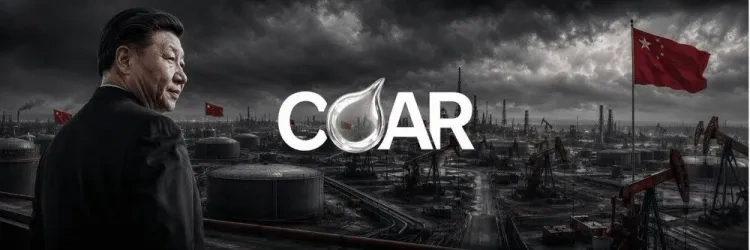
COAR Coin: What Chinese Oil Asset Reserve Really Is
COAR coin is a new Solana oil-narrative token. Learn what Chinese Oil Asset Reserve claims, how to verify the contract, and key trading risks.
Did the CLARITY Act Pass Today? Latest Status and the History of the Crypto Bill
SEO meta description: Did the CLARITY Act pass today? Read the latest crypto bill update, the history of the CLARITY Act, House and Senate votes, and what happens next for U.S. crypto regulation.
What Is Chinese Oil Asset Reserve (COAR) Token? $COAR and Coar Stock Relationship Explained
Chinese Oil Asset Reserve (COAR) token explained, $COAR price, Solana details, and the relationship between COAR and Coar stock. Learn the latest facts.
Trade to Earn on WEEX: Join the Futures Trading Event and Earn Real-Time WXT Rewards Throughout May 2026
Join the WEEX Trade to Earn Series Five event from May 1–31, 2026 and earn real-time WXT rewards through futures trading. Boost your rebate level, complete missions, invite friends, and maximize your trade to earn rewards with USDT-M futures trading.

Trade to Earn With Futures Trading on WEEX: How Smart Traders Are Turning Every Position Into WXT Rewards
Join the WEEX Trade to Earn Series Five campaign and earn real-time WXT rewards through futures trading from May 1–31, 2026. Upgrade mining levels, unlock higher rebate ratios, complete missions, and maximize your trade to earn rewards with USDT-M futures trading.
CBRS Stock: What to Know About Cerebras After Its IPO
CBRS stock surged after Cerebras priced its IPO at $185. Learn what the AI chipmaker does, why valuation matters, and what risks to watch.

SpaceX IPO Stock Market Impact: What Investors Should Watch
SpaceX’s IPO could reshape indexes, liquidity, space stocks, and crypto risk appetite. Here is what matters before the listing.

HMSTR Token Price: What Moves Hamster Kombat Now
Track HMSTR token price, supply, catalysts, and risks. Learn what drives Hamster Kombat price action and what traders should watch.
How to Buy Public Asset Control (PAC) Token in 2026: Latest Solana Buying Guide
How to buy Public Asset Control (PAC) token in 2026, PAC contract address, Solana wallet setup, Jupiter swap guide, latest price, liquidity, and risks.
What Is Public Asset Control (PAC) Token and How Does It Work? Latest Solana PAC Token Guide
Public Asset Control (PAC) token explained. Learn what PAC is, how it works on Solana, current price snapshot, risks, and buying basics.
WEEX 0-Fee Futures Event: Trade Gold, Silver, Crude Oil and Stock Futures With 0% Fees
Explore the WEEX 0-Fee Futures event, featuring 0% fees on gold, silver, crude oil, and stock futures from February 9 to April 30, 2026.
Can PAC Coin Reach $1 Soon? Analyzing Public Asset Control
PAC is a Solana-based meme token with a government-themed narrative, but it is highly speculative.
At its current price (~$0.0009) and 1B supply, reaching $1 would require a $1B market cap, which is very unlikely.
Short-term moves to $0.001 or $0.01 are more realistic, but the token is highly volatile due to low liquidity and hype-driven trading.
Overall, $1 is not a realistic target, and PAC is better suited for short-term speculation than long-term investment.
What Is SAOS? Strategic American Oil Supply Token Explained
SAOS is a meme token on Solana with a 75,000 USD market cap and 22,000 USD locked liquidity, positioned around oil supply themes but lacking real asset backing
It thrives on pure narrative speculation, with no utility, website, or doxxed team, making it highly volatile and attention-dependent
Traders should distinguish SAOS from legitimate real-world asset projects, as its branding is speculative rather than substantive
Positive aspects include locked liquidity reducing rug pull risks, but low trading activity signals high uncertainty
NBIS Stock: What Nebius’ AI Cloud Surge Means Now
NBIS stock jumped as Nebius reported rapid AI cloud growth. See the key Q1 2026 numbers, catalysts, valuation risks, and what to watch next.
What Is Public Asset Control (PAC) Coin? Explained for Beginners
Public Asset Control (PAC) is a Solana-based token that uses a “government asset control” narrative involving oil and gold themes, but it has no verified ties to any real institutions or governments. It is mainly an entertainment-focused, speculative meme coin.
The project’s claims about links to entities like BlackRock or Palantir are unverified, and its own disclaimer states it is not a real financial or institutional asset. Like many new Solana tokens, PAC is highly volatile, with low liquidity and limited transparency, including no fully verified audit.
Overall, PAC is a high-risk speculative token driven by hype and storytelling rather than real utility. Beginners are advised to be cautious, verify contract details, and prioritize risk control before considering any trading.
Public Asset Control: What PAC Token Really Is
Public Asset Control PAC is a Solana token with bold asset-control branding. Learn what it is, what is verified, and the key trading risks.


