
US XRP RESERVE (USXR): What It Is and Key Risks


US XRP RESERVE (USXR) is a Solana-based crypto token using XRP and “reserve” language as its market narrative. That branding may catch attention, but it should not be confused with XRP itself, Ripple, or the XRP Ledger. As of June 2026, visible market pages describe USXR as a new, high-risk token with limited public documentation, thin liquidity, and unverified project details.
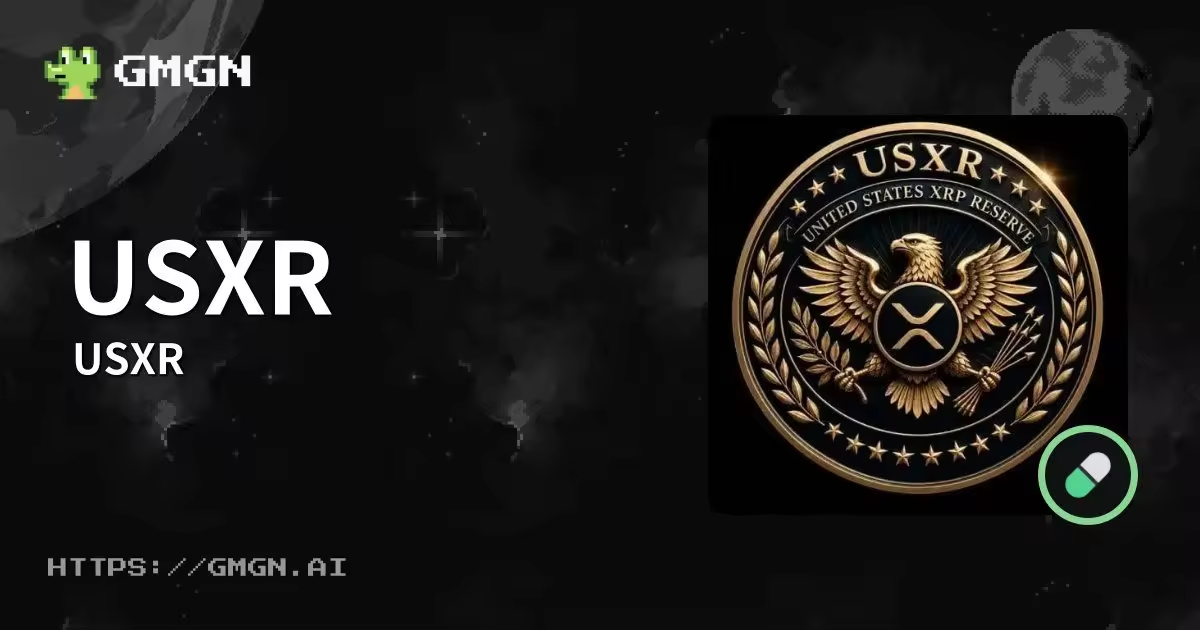
The practical question is not whether the name sounds interesting. It is whether traders can verify the contract, liquidity, supply, project claims, and exit conditions before putting money at risk. For context, readers can separately track the actual XRP price and Solana price, because USXR’s value is not the same thing as XRP market performance.
What Is US XRP RESERVE (USXR)?
US XRP RESERVE (USXR) appears to be a meme or experimental token issued on Solana. Market pages list USXR with a roughly 1 billion token supply, but live price, market cap, and volume figures differ across platforms. That is common with very new or thinly traded tokens, especially when liquidity is fragmented across decentralized trading venues.
The name suggests a connection to XRP reserves or U.S. digital-asset reserve themes. The important distinction: XRP is the native token of the XRP Ledger, while USXR is shown on available pages as a Solana token. A token can reference XRP in its branding without being part of Ripple, XRP Ledger infrastructure, or any official reserve program.
| Item | What Traders Can Verify |
|---|---|
| Token name | US XRP RESERVE |
| Ticker | USXR |
| Network shown by major pages | Solana |
| Approximate supply shown | Around 1 billion USXR |
| XRP/Ripple affiliation | Not verified |
| Documentation | Limited; no clear whitepaper visible from checked pages |
| Main risk category | Meme-token volatility, liquidity, and branding confusion |
How USXR Uses the XRP Reserve Narrative
USXR’s main hook is narrative. It borrows from three themes that have attracted retail attention: XRP, U.S. crypto reserve discussion, and meme-token speculation. That can create fast awareness, but it does not create fundamental value by itself.
A real reserve asset would need transparent custody, auditable holdings, redemption rules, governance, and clear legal disclosures. US XRP RESERVE (USXR), based on visible pages checked in June 2026, does not provide enough public evidence to treat it as an asset-backed reserve token. The better reading is that USXR is a speculative meme token using reserve-style language, not a verified claim on XRP or a basket of assets.
USXR Price and Liquidity: What Matters More Than the Chart
For a token like USXR, the price chart can be less useful than liquidity quality. A small market cap can move sharply on modest buying, but the same structure can trap holders when selling pressure appears. Traders should check contract address, pool liquidity, holder concentration, recent volume, and whether the token is marked as verified by the wallet or explorer they use.
This is where many new-token traders lose money: they focus on percentage gains and ignore the size they can actually exit. A chart may show a large short-term move, but if liquidity is shallow, selling even a moderate position can cause heavy slippage.
| Checkpoint | Why It Matters |
|---|---|
| Contract address | Avoids buying a copycat token with the same name |
| Liquidity pool depth | Shows whether exits are realistic |
| Holder distribution | Flags whale concentration or insider risk |
| Trading volume | Helps distinguish activity from idle listings |
| Contract permissions | Can reveal admin or mint risks |
| Documentation | Separates narrative from verifiable project design |
Readers new to token purchases should review a basic how to buy crypto guide before interacting with new Solana assets.
Is US XRP RESERVE Connected to XRP?
There is no verified evidence from the checked pages that US XRP RESERVE (USXR) is officially connected to Ripple, XRP, or the XRP Ledger. Ripple describes XRP as the native asset of the XRP Ledger. USXR pages, by contrast, identify the token as operating on Solana.
That distinction matters. XRP is a long-running digital asset with its own ledger and ecosystem. USXR is a separate token with separate risks. Buying USXR is not the same as getting exposure to XRP, Ripple products, or XRP Ledger activity.
Should Traders Watch USXR?
USXR may interest short-term meme-token traders who understand Solana DEX mechanics, contract verification, and liquidity risk. It is less suitable for users looking for a documented reserve product, a verified XRP ecosystem token, or a lower-risk long-term holding.
The more disciplined approach is to treat US XRP RESERVE (USXR) as an unproven speculative asset until stronger evidence appears: a working website, clear whitepaper, audited reserve proof, transparent team or governance, and consistent contract data across reputable platforms. For position sizing and exit planning, a crypto risk management checklist is more useful than social-media hype.
Conclusion
US XRP RESERVE (USXR) is best understood as a Solana meme or experimental token built around XRP-reserve branding. The branding is the point, but it is also the risk. Without verified Ripple affiliation, reserve audits, or robust documentation, traders should separate the narrative from the asset itself.
For now, the key question is not “Can USXR pump?” Many thin tokens can. The better question is whether you can verify what you are buying, understand who controls supply and liquidity, and exit without severe slippage.
FAQ
1. Is US XRP RESERVE (USXR) the same as XRP?
No. XRP is the native token of the XRP Ledger. USXR appears on available market pages as a separate Solana token using XRP-themed branding.
2. Is USXR officially backed by Ripple?
No verified Ripple backing or official XRP Ledger relationship was visible from the checked sources as of June 2026.
3. Why do USXR price numbers differ across platforms?
New and thinly traded tokens often show fragmented data because exchanges, wallets, and DEX trackers may pull from different pools, contracts, or update schedules.
4. What should I check before buying USXR?
Verify the contract address, liquidity, holder concentration, token permissions, trading venue, and whether the project has credible documentation.
5. Is USXR a reserve-backed token?
Not based on the visible evidence checked. A reserve-backed claim would need transparent holdings, custody details, audits, and redemption or governance rules.
Risk Warning
Crypto assets are highly volatile and may result in partial or total loss. US XRP RESERVE (USXR) carries additional risks because it appears to be a new, lightly documented token with meme-style branding, uncertain liquidity, possible copycat-contract confusion, and no verified Ripple or XRP Ledger affiliation. Always verify the contract address, understand slippage and custody risks, and avoid using funds you cannot afford to lose.
You may also like

What Is BscScan? A Beginner’s Guide to the BNB Chain Explorer
BscScan is the main block explorer for BNB Chain. It lets you search wallet addresses, transactions, smart contracts,…

What Is Martingale Strategy? Risks, Rules, and Examples
The Martingale strategy doubles position size after each loss, seeking one win to recover all drawdowns. In crypto,…

Martingale Strategy: What Traders Should Know Before Using It
The Martingale strategy doubles position size after each loss to “win back” all prior losses with a single…

Martingale vs DCA: Which Strategy Is Better for Crypto Investors?
This guide explains how the Martingale strategy and dollar-cost averaging (DCA) work in crypto, where they shine, and…

What Is PAX Gold (PAXG)? A Beginner’s Guide to Gold-Backed Crypto
PAX Gold (PAXG) is a tokenized form of gold: each token represents one fine troy ounce of a…
What Is SafePal Wallet? A Beginner’s Guide to SafePal in 2026
SafePal is a multi-chain, self-custody wallet brand with hardware, mobile, and browser products designed to help you hold…
What Is Perpetual Futures (Perp) Trading? A Beginner’s Guide
Perpetual futures let you go long or short on crypto without owning the asset or worrying about expiry…
Is PAX Gold Safe? Benefits, Risks and What Investors Should Know
PAXG (PAX Gold) puts physical gold on-chain. Each token represents ownership of one fine troy ounce of a…
PAX Gold Explained: How Digital Gold Works in Crypto
PAX Gold (PAXG) turns vaulted, investment-grade gold into a crypto asset you can move in minutes. This guide…
PAX Gold vs Physical Gold: Which Is Better for Investors?
PAX Gold (PAXG) turns a bar of gold into a token you can move in minutes, while physical…

How to Use SafePal Wallet: A Step-by-Step Guide for Beginners
This guide shows you how to set up a SafePal wallet, protect your seed phrase, add tokens and…
How to Buy ARKM: A Beginner-Friendly Guide
This guide explains what ARKM is, how to buy ARKM safely on a centralized or decentralized exchange, and…
If You Can’t Buy TSLA Stocks, What Are the Trading Alternatives?
If you want exposure to TSLA but can’t open a U.S. brokerage account, this guide explains practical routes…

If You Can’t Buy CRDO Stocks, What Are the Trading Alternatives?
If you’re trying to access CRDO (Credo Technology Group) but can’t open a US brokerage account, this guide…
Where to Buy QQQ Stocks If You Don’t Have Brokerage Access
If you want exposure to QQQ but don’t have a US brokerage account, you have several paths. This…

If You Can’t Buy CRCL Stocks, What Are the Trading Alternatives?
CRCL tracks Circle Internet Group, a key stablecoin and payments player tied to USDC. If you can’t open…
Where to Buy SPY Stocks If You Don’t Have Brokerage Access
If you can’t open a US brokerage account but still want exposure to SPY, there are workable routes.…
If You Can’t Buy NBIS Stocks, What Are the Trading Alternatives?
NBIS has been volatile and news-heavy in 2026, but many readers face hurdles opening US brokerage accounts. This…
What Is BscScan? A Beginner’s Guide to the BNB Chain Explorer
BscScan is the main block explorer for BNB Chain. It lets you search wallet addresses, transactions, smart contracts,…
What Is Martingale Strategy? Risks, Rules, and Examples
The Martingale strategy doubles position size after each loss, seeking one win to recover all drawdowns. In crypto,…
Martingale Strategy: What Traders Should Know Before Using It
The Martingale strategy doubles position size after each loss to “win back” all prior losses with a single…
Martingale vs DCA: Which Strategy Is Better for Crypto Investors?
This guide explains how the Martingale strategy and dollar-cost averaging (DCA) work in crypto, where they shine, and…
What Is PAX Gold (PAXG)? A Beginner’s Guide to Gold-Backed Crypto
PAX Gold (PAXG) is a tokenized form of gold: each token represents one fine troy ounce of a…
What Is SafePal Wallet? A Beginner’s Guide to SafePal in 2026
SafePal is a multi-chain, self-custody wallet brand with hardware, mobile, and browser products designed to help you hold…


