
US Stock Futures Explained: How They Work and How to Read Them


US stock futures are contracts that let traders lock in a price today for a stock index that settles at a later date. In practice, most people use them for two things: to position ahead of the cash market open, and to read where Wall Street is likely to head before the bell rings at 9:30 a.m. ET. When a headline says "Dow futures are down 300 points" at 6 a.m., that is US stock futures at work.
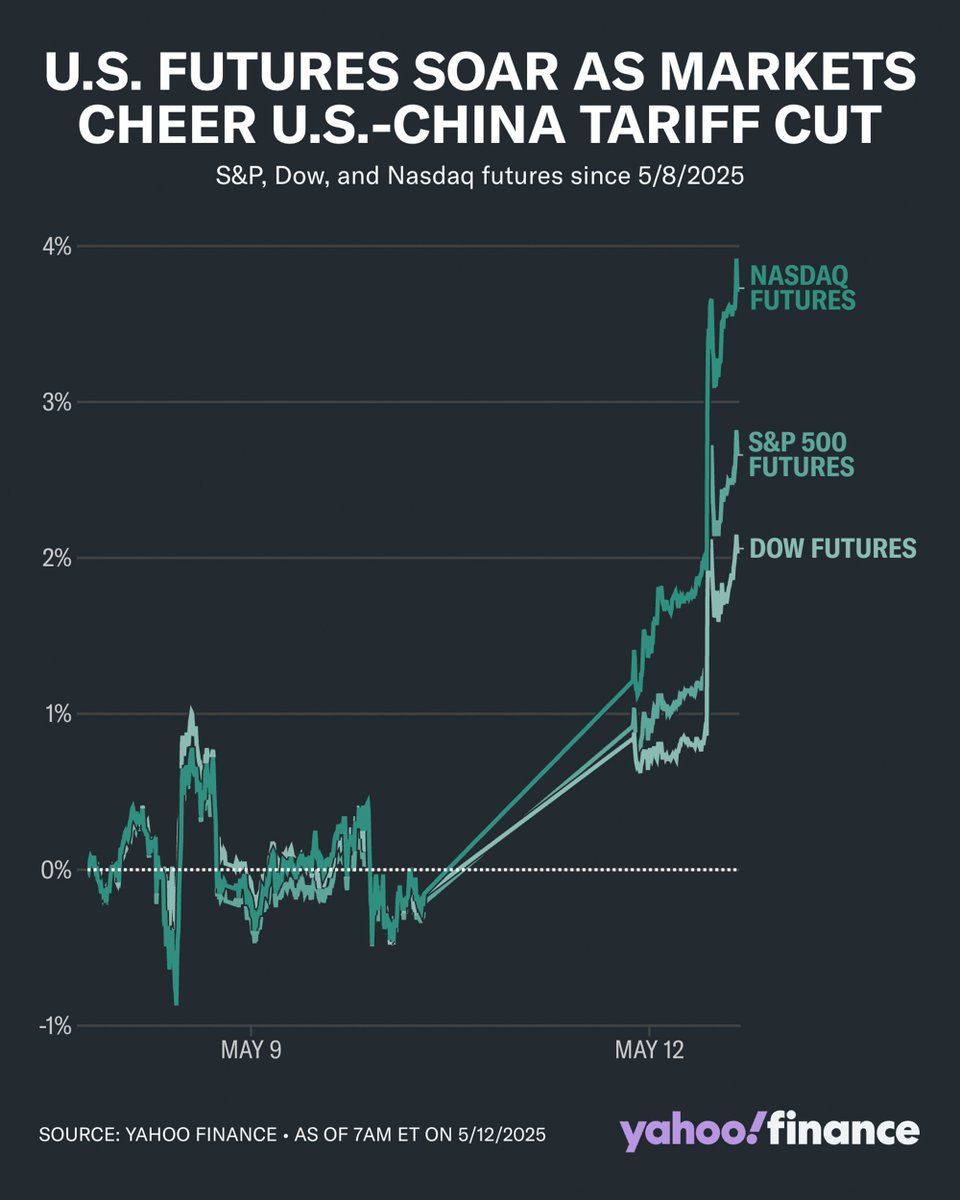
The contracts trade nearly around the clock on the CME, so they react to overnight news long before regular trading begins. That continuous pricing is exactly why they have become a default macro dashboard for traders far outside equities, including the crypto market.
What US stock futures actually are
A futures contract is a binding agreement to buy or sell an asset at a set price on a set date. US stock futures are built on the major equity indices rather than single companies. The four contracts most people watch are:
| Contract | Underlying index | Common nickname |
|---|---|---|
| E-mini S&P 500 (ES) | S&P 500 | "S&P futures" |
| E-mini Nasdaq-100 (NQ) | Nasdaq-100 | "Nasdaq futures" |
| E-mini Dow (YM) | Dow Jones Industrial Average | "Dow futures" |
| E-mini Russell 2000 (RTY) | Russell 2000 | "small-cap futures" |
These are cash-settled, meaning no one delivers a basket of 500 stocks at expiration. The contract simply settles to the index value in cash. They expire quarterly, and active traders "roll" positions to the next contract before expiry rather than letting them settle.
How US stock futures work
Two features define the mechanics: leverage and continuous trading.
Futures are margined products. You post a fraction of the contract's notional value, often roughly 5% to 12% depending on the contract and broker, and control the full position. That leverage cuts both ways. A small move in the index produces an outsized swing in your account, which is the single most common reason new futures traders blow up.
Because the contracts trade nearly 24 hours a day, five days a week, US stock futures absorb news while the cash market is closed: an overseas selloff, an earnings miss after the bell, a surprise jobs number, or a geopolitical shock. By the time the New York open arrives, futures have usually already moved.
How to read US stock futures
The most useful everyday function of US stock futures is as a directional indicator. Here is the practical read:
| What you see | What it usually signals |
|---|---|
| S&P 500 futures up 0.5% premarket | Cash market likely to open higher |
| Nasdaq futures down sharply, Dow futures flat | Weakness concentrated in tech, not the whole market |
| All four contracts deeply red overnight | Broad risk-off move, often macro or geopolitical |
| Futures reverse after an economic data release | Market is repricing rate or inflation expectations |
Two cautions matter here. First, the premarket signal is not a guarantee; futures can point up at 8 a.m. and the cash market can still open lower if sentiment shifts. Second, thin overnight volume can exaggerate moves, so a dramatic 3 a.m. swing on light trading is less reliable than the same move at 9:15 a.m.
The better way to use them is as one input among several, not a crystal ball. Seasoned traders treat futures as a measure of pressure rather than a precise forecast.
Why crypto traders watch US stock futures
This is where US stock futures matter well beyond Wall Street. Over the past several years, Bitcoin and large-cap crypto have often traded with a meaningful correlation to US equities, especially the Nasdaq-100. When tech futures sell off hard overnight, crypto frequently moves in sympathy, and vice versa.
Crypto never closes, so traders use US stock futures to fill in the macro picture during hours when US equities are shut. A sharp drop in S&P 500 futures after a hawkish Federal Reserve comment can hit BTC and ETH within minutes, because the same risk-appetite signal drives both. The correlation is not constant, and it loosens during crypto-specific events, but ignoring it has burned plenty of leveraged traders.
The structural parallel also makes futures intuitive for crypto users. If you understand margin, leverage, long and short positions, and the idea of a contract tracking an underlying price, you already understand the core of crypto derivatives. The mechanics carry over directly to crypto futures trading, with one major difference covered below.
US stock futures vs. crypto perpetual futures
The biggest structural gap is expiry. Traditional US stock futures expire on a fixed quarterly schedule and must be rolled. The dominant crypto contract, the perpetual future, never expires and instead uses a funding rate to keep its price tethered to spot.
| Feature | US stock futures | Crypto perpetual futures |
|---|---|---|
| Underlying | Equity index | Cryptocurrency (e.g. BTC) |
| Expiry | Quarterly, must roll | None |
| Price anchor | Settles to index | Funding rate vs. spot |
| Trading hours | ~24/5 | 24/7 |
| Typical max leverage | Low single digits to ~20x | Much higher on some venues |
The takeaway: crypto perpetuals remove the expiry-and-roll friction but add a funding cost and, on many platforms, far higher leverage, which raises liquidation risk significantly.
What traders usually miss
The trap with US stock futures, and with futures generally, is treating leverage as free buying power. The margin you post is not the size of your risk; the notional position is. A 2% adverse move on a heavily leveraged position can wipe out a deposit. Overnight gaps are the other underrated danger: a position that looked safe at midnight can open against you after a 3 a.m. headline, with no chance to react. The same discipline applies whether you are trading index futures or crypto contracts: size positions to the notional, not the margin, and respect the overnight tape.
Conclusion
US stock futures are two things at once: a way to trade index direction with leverage, and a near-real-time gauge of market mood that runs while the cash market sleeps. For crypto traders, that second role is the valuable one, because equity futures often front-run the risk sentiment that moves Bitcoin and altcoins. Learn to read US stock futures as pressure rather than prophecy, keep leverage honest, and the same skills transfer cleanly to crypto derivatives. Ready to apply the concept in crypto? Explore futures trading on WEEX.
FAQ
1. What are US stock futures in simple terms? They are contracts that let you agree on a price today for a stock index that settles later. Traders use them to bet on index direction and to gauge where the market will open.
2. Can US stock futures predict the market open? They strongly hint at it. If S&P 500 futures are up before the bell, the cash market usually opens higher, but sentiment can shift, and light overnight volume can distort the signal.
3. Why do crypto traders watch US stock futures? Bitcoin and large-cap crypto often correlate with US equities, especially the Nasdaq-100. Equity futures trade overnight, so they help crypto traders read macro risk appetite when US stocks are closed.
4. How are US stock futures different from crypto perpetual futures? Stock index futures expire quarterly and must be rolled. Crypto perpetual futures never expire and use a funding rate to track spot price, which removes roll friction but adds a recurring funding cost.
5. Are US stock futures risky for beginners? Yes. They are leveraged, so small index moves create large account swings, and overnight gaps can move against you before you can react. Position sizing and risk management are essential.
Risk Warning
Trading futures, whether on equity indices or crypto, involves substantial risk. Leverage magnifies both gains and losses, and you can lose more than your initial margin on traditional futures or face liquidation on leveraged crypto contracts. Prices are volatile and can gap sharply on overnight news, and crypto assets in particular can lose part or all of their value. Funding costs, liquidity gaps, and counterparty and regulatory risk all apply. Nothing here is investment advice. Trade only with capital you can afford to lose, and use risk controls suited to your experience.
You may also like

Apple Stock Drops as Price Hikes Loom: Will iPhone 17 Cost More This September?
Apple Stock is sliding as chatter grows that Apple may raise iPhone 17 prices this September. Investors are…

XAUT Can Now Be Used as Loan Collateral: Is Tokenized Gold Entering a New Era?
XAUT just gained real utility: Ledn now accepts XAUT as loan collateral, letting holders borrow stablecoins against tokenized…

Apple Stock and the MacBook Price Increase 2026: What It Means for AAPL Investor
Apple Stock is entering 2026 with a key question: will higher MacBook prices expand margins or choke demand?…
Is PENGU Crypto a 10X Opportunity or High-Risk Hype? July 2026 Forecast
PENGU ties the Pudgy Penguins brand to meme coin momentum, mixing a strong community with high-risk volatility. This…

Apple Stock vs Samsung: Who Benefits More From the AI Memory Crisis?
The AI memory crisis—driven by shortages in high-bandwidth memory (HBM) for data centers and premium mobile DRAM like…
What is Applied Digital Tokenized Stock (Ondo)(APLDON) Coin? Everything You Need to Know and How to Trade APLDON/USDT
APLDON is Ondo Finance’s tokenized version of Applied Digital stock (APLD), designed to mirror economic exposure to APLD…

Microsoft Stock After the Quantum Computing Controversy: What Investors Should Know
Microsoft Stock dipped into a new debate cycle after the “Majorana 2” quantum chip reveal met pushback from…

Microsoft Stock Pulls Back: Is Now the Time to Buy MSFT?
Microsoft stock has slipped after a sharp run, and the debate is centering on whether heavy AI spending…
Microsoft Stock vs Google Stock: Which AI Giant Is the Better Buy in 2026?
Microsoft Stock and Google Stock both ride the same AI wave, but they earn and spend in different…

What is Intuitive Machines Tokenized Stock (Ondo)(LUNRON) Coin? Everything you need to know, how to buy, and when is the best time
Intuitive Machines Tokenized Stock (Ondo) (ticker LUNRON) is a tokenized representation of Intuitive Machines’ Nasdaq-listed equity (LUNR), now…
What Is Digital Renminbi (RMB)? Everything You Need to Know
Digital Renminbi (also called e-CNY or digital RMB) is China’s central bank digital currency (CBDC). This guide explains…
What is Vistra Tokenized Stock (Ondo)(VSTON) Coin: everything you need to know before you trade
This guide explains what Vistra Tokenized Stock (Ondo) (VSTON) is, how it works on-chain, who’s behind it, how…
What is GE Vernova (Ondo Tokenized)(GEVON) Coin: A Comprehensive Guide to Tokenized Stock Trading on WEEX
GE Vernova (Ondo Tokenized) (GEVON) is a tokenized stock that mirrors the economic exposure of GE Vernova (GEV)…
How to Buy BlockDAG (BDAG): A Step-by-Step Guide
This guide explains what BlockDAG and the BDAG token aim to do, how to buy BlockDAG (BDAG) through…
BlockDAG Risks Explained: What Investors Should Know
BlockDAG technology promises faster confirmation and higher throughput by allowing multiple blocks to be created and merged in…

BlockDAG Price Prediction 2026–2030: Can BDAG Reach $1?
This article maps out how BlockDAG’s BDAG token could trade from 2026 to 2030, and what would need…
USWR Price Prediction 2026: Can United States Water Reserve Hit $1?
USWR price prediction 2026 for United States Water Reserve. Can the Solana meme coin reach $1? Scenarios, risks, and why $1 is a long shot.
F1 Drivers' Championship Prediction Market: 2026 Odds Decoded
See how the 2026 F1 Drivers' Championship prediction market prices Antonelli and Hamilton, how to read the odds as probability, and the traps to avoid.
Apple Stock Drops as Price Hikes Loom: Will iPhone 17 Cost More This September?
Apple Stock is sliding as chatter grows that Apple may raise iPhone 17 prices this September. Investors are…
XAUT Can Now Be Used as Loan Collateral: Is Tokenized Gold Entering a New Era?
XAUT just gained real utility: Ledn now accepts XAUT as loan collateral, letting holders borrow stablecoins against tokenized…
Apple Stock and the MacBook Price Increase 2026: What It Means for AAPL Investor
Apple Stock is entering 2026 with a key question: will higher MacBook prices expand margins or choke demand?…
Is PENGU Crypto a 10X Opportunity or High-Risk Hype? July 2026 Forecast
PENGU ties the Pudgy Penguins brand to meme coin momentum, mixing a strong community with high-risk volatility. This…
Apple Stock vs Samsung: Who Benefits More From the AI Memory Crisis?
The AI memory crisis—driven by shortages in high-bandwidth memory (HBM) for data centers and premium mobile DRAM like…
What is Applied Digital Tokenized Stock (Ondo)(APLDON) Coin? Everything You Need to Know and How to Trade APLDON/USDT
APLDON is Ondo Finance’s tokenized version of Applied Digital stock (APLD), designed to mirror economic exposure to APLD…


