
SpaceX Acquires Cursor: What the $60 Billion Deal Means

The timing caught almost everyone off guard.
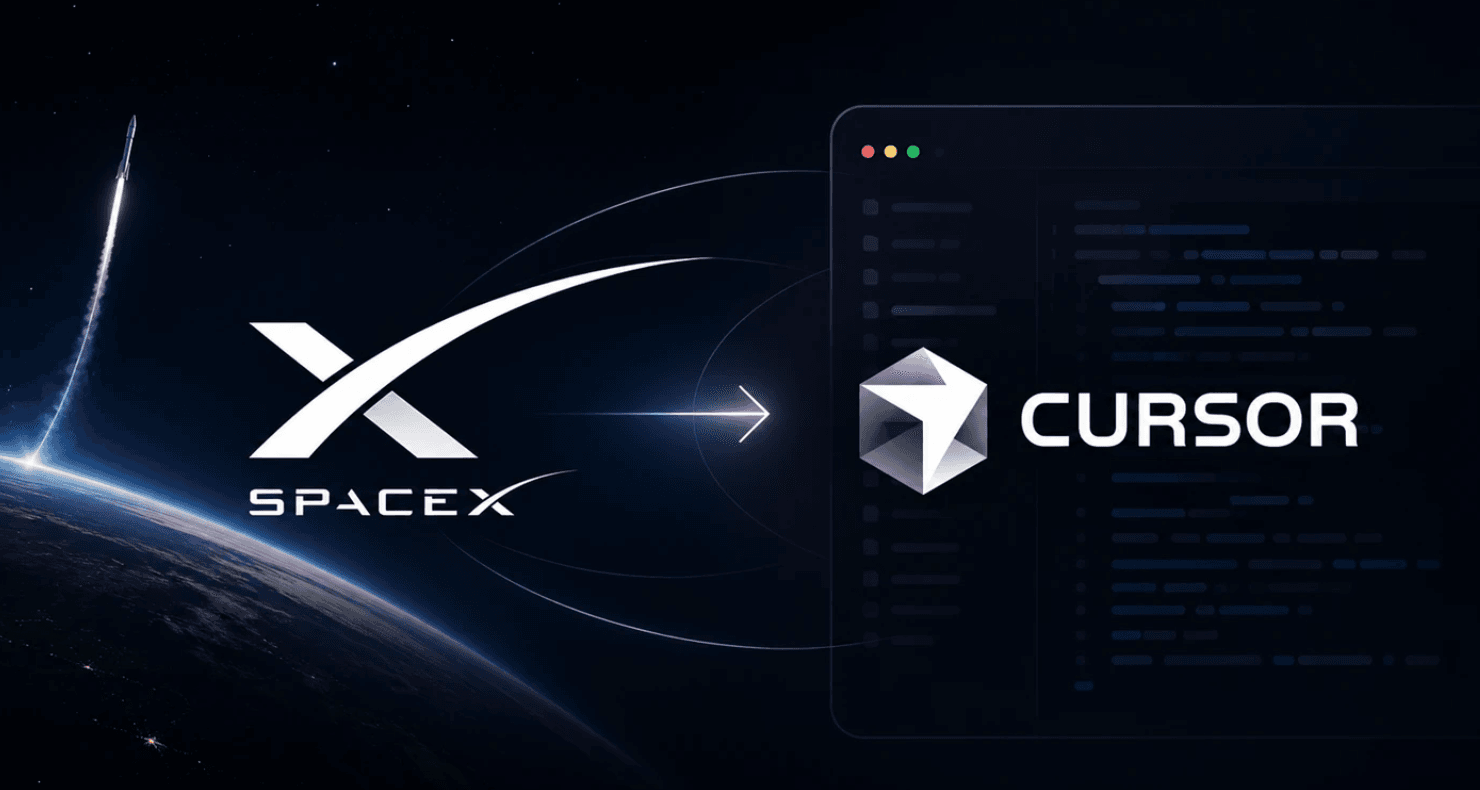
SpaceX had barely finished its public market debut when the announcement dropped: an agreement to acquire Anysphere — the company behind Cursor — for approximately $60 billion. It instantly became one of the largest AI-related acquisitions of the year, and it raised a question that spread quickly across both Wall Street and Silicon Valley.
Why would a space company spend $60 billion on an AI coding platform? The answer probably says more about where SpaceX thinks it's going than where it's been.
What Is Cursor?
For anyone outside developer circles, Cursor might not be a familiar name — but inside them, it's been hard to miss for the past couple of years.
Built by Anysphere, Cursor is an AI coding platform designed for professional software development. It helps engineers write, edit, debug, and optimize code faster — not by replacing the developer, but by integrating directly into existing workflows and handling the parts of the job that eat up time without requiring much judgment.
That focus on professional use rather than consumer applications is a big part of what set Cursor apart as the AI coding space got crowded. A lot of tools emerged claiming to help people code. Cursor went after the engineers who were already doing it seriously, and that positioning paid off.
By 2026, it had grown into one of the most recognized names in AI-assisted development. For investors tracking the sector, it was already on the shortlist of companies that looked built to last in a space that was moving fast and shaking out quickly.
Why Did SpaceX Buy Cursor?
At first glance, the acquisition may seem unusual.
SpaceX is known for rockets, satellite networks, and aerospace engineering. Cursor builds software tools for developers.
However, a closer look suggests several possible strategic motivations.
Modern aerospace companies generate enormous amounts of software. SpaceX operates launch systems, spacecraft, satellite infrastructure, communications networks, and increasingly complex automation systems.
All of these require large-scale software development.
AI coding tools like Cursor have the potential to improve productivity across engineering teams, helping developers write and maintain software faster than traditional methods.
Beyond internal efficiency, the acquisition may also give SpaceX access to one of the fastest-growing areas of artificial intelligence.
AI infrastructure, AI models, and AI-powered software tools are becoming major growth markets. By acquiring Cursor, SpaceX gains a direct position inside that ecosystem.
Rather than simply using AI products built by other companies, SpaceX now owns a platform helping create them.
Why the $60 Billion Price Tag Matters
The number itself became part of the story.
$60 billion puts Cursor among the most valuable AI software companies anywhere in the world. That kind of valuation isn't really about what the business earns today — it's about what the market believes AI coding tools could become. If AI gets deeply embedded into how professional software is built, the companies controlling those tools end up sitting on something genuinely valuable. Not just useful software, but infrastructure that the rest of the industry depends on.
Seen that way, the acquisition is less about buying a product and more about taking a position on how software development looks a decade from now. Whether $60 billion turns out to be the right number is a question nobody can answer yet. But the scale of the bet makes clear that SpaceX isn't approaching AI casually.
What Does This Mean for SpaceX?
This is probably where the acquisition gets most interesting for investors.
SpaceX built its reputation on rockets, satellite communications, and pushing the boundaries of what commercial space could look like. That identity isn't going anywhere. But the Cursor deal adds something that wasn't part of the SpaceX story before — a serious AI software business sitting alongside the aerospace operations.
That matters more than it might initially seem. AI companies and aerospace companies don't get valued the same way. Technology investors think about software scalability, recurring revenue, platform ecosystems. Cursor brings all of that into a company that previously had none of it on the software side.
If SpaceX can integrate Cursor without losing focus on its core businesses, the result could be a growth profile that looks meaningfully different from what most analysts were modeling before the deal was announced. More diversified, more software-weighted, and potentially more attractive to a broader pool of institutional investors than a pure-play aerospace company would be.
How the Market Reacted
The announcement generated significant discussion across financial and technology communities.
Some observers viewed the deal as evidence that SpaceX intends to become a larger player in artificial intelligence. Others questioned whether a software acquisition of this scale fits naturally alongside the company's aerospace operations.
At the same time, many investors focused on the broader trend.
Large technology companies continue spending aggressively on AI infrastructure, AI models, and productivity software. SpaceX's move can be seen as part of that larger race.
The acquisition also reinforced the idea that AI is no longer confined to traditional software companies. Industries ranging from manufacturing and healthcare to aerospace are increasingly integrating AI into core operations.
What Happens to Cursor Now?
For the developers who use Cursor daily, the practical question is simple: does anything actually change?
Based on what SpaceX has indicated so far, the answer is not immediately. Cursor is expected to keep running as a standalone platform — same product, same interface, just with significantly more resources behind it. That's a familiar playbook in large tech acquisitions. Absorbing everything at once tends to break what made the product worth buying in the first place, so the smarter move is usually to leave the core experience alone while investing in what comes next.
If that holds, users could eventually see expanded features, deeper AI capabilities, and infrastructure improvements that a smaller independent company would have struggled to fund on its own. What that looks like in practice is still early to say.
Why This Deal Matters Beyond SpaceX
The Cursor acquisition is worth paying attention to even for people who don't particularly follow SpaceX.
What the deal signals is something bigger than one company making one purchase. AI is no longer a strategic consideration that industries are still debating — the debate has moved on. The question now is how aggressively to invest, and how fast.
A few years ago, AI coding assistants were genuinely experimental. Interesting tools, uncertain futures, niche user bases. The fact that one just traded at $60 billion — and that a company like SpaceX was the buyer — says something about how completely that perception has shifted. These tools are now central assets in serious corporate strategies, not side projects.
The underlying story is that software development itself is being changed by AI in ways that are starting to show up in valuations, acquisition activity, and strategic planning at the highest levels.
As interest in AI stock continues to grow, many investors are also following related AI and technology stocks. Platforms such as WEEX provide access to a wide range of stocks, while initiatives like First Stock Trade Protected have been introduced to support eligible users exploring stock trading for the first time.
Conclusion
SpaceX buying Cursor for $60 billion is one of the more unexpected stories to come out of 2026 — not because the deal doesn't make sense, but because few people saw it coming from that direction.
The company that built its identity around rockets and satellites has now placed a significant bet on AI software. Whether that bet reshapes SpaceX's long-term profile or ends up as an expensive footnote is a question that will take years to answer. But the deal makes one thing clear: the competition for AI's most valuable building blocks has expanded well past the companies that were originally expected to be fighting over them.
For investors, developers, and anyone watching where the technology industry is heading, the message is straightforward. The next phase of AI isn't just about models and compute. It's about who controls the tools that builders use — and that fight is now fully underway
FAQ
1. What is Cursor?
Cursor is an AI-powered coding platform developed by Anysphere that helps developers write, edit, and improve software using artificial intelligence.
2. How much did SpaceX pay for Cursor?
SpaceX announced an all-stock acquisition valued at approximately $60 billion.
3. Why did SpaceX acquire Cursor?
The company appears to be expanding its AI capabilities while gaining access to one of the fastest-growing sectors in software development.
4. Will Cursor continue operating independently?
Current reports suggest Cursor will continue operating as a standalone platform following the acquisition.
5. Why is the Cursor acquisition important?
The deal highlights the growing strategic importance of AI software tools and demonstrates how aggressively major companies are investing in artificial intelligence.
Disclaimer
This content is provided for general informational and educational purposes only and should not be considered financial, investment, legal, or tax advice. Nothing in this article constitutes an offer, recommendation, solicitation, or invitation to buy, sell, or trade any crypto asset or use any specific service. Crypto assets are highly volatile and involve risk, including the potential loss of capital. WEEX services may not be available in all regions and are subject to applicable laws, regulations, and user eligibility requirements. Please carefully assess risks and confirm local requirements before making any financial decisions.
You may also like
SK Hynix Nasdaq Listing 2026: What Investors Need to Know About SKHY Stock
SK Hynix stock analysis 2026: Is SKHY a good investment after the Nasdaq debut? Learn how to trade SKHYNIX/USDT on WEEX.
SK Hynix Stock Forecast 2026: Is SKHYNIX a Good Investment in July 2026?
SK Hynix stock analysis 2026: HBM demand, earnings growth, and risks explained. Should you invest in SKHYNIX? Read our full forecast and trading guide.
CDOF Crypto Review 2026: Is the Chinese Digital Oil Fund Token a Good Investment in July?
What is CDOF crypto? Learn about the Chinese Digital Oil Fund token on Solana, its market performance, potential risks, and whether it's worth buying in July 2026.
France vs Morocco Prediction Crypto Odds
France vs Morocco Prediction Crypto Odds explained. Learn how Polymarket market data, blockchain prediction markets, liquidity, and crypto odds work during FIFA 2026.
Bitcoin Price Prediction 2026: Is the BTC Bottom Finally In?
This article maps a clear path to Bitcoin Price Prediction 2026 and weighs the question: Is the BTC…
Aptos (APT) Token Unlock July 12: Will APT Price Crash?
Aptos (APT) faces a scheduled token unlock on July 12, and traders are asking if the added supply…
What is Bitmine BMNR and Why Does It Own 5.7 Million ETH?
This article explains the claim that “Bitmine BMNR” controls 5.7 million ETH, what Bitmine BMNR might be, how…
Why is XRP Price Pumping Today After Ripple MiCA License Approval?
XRP price momentum accelerated after reports that Ripple secured a MiCA-compliant authorization in the EU, a milestone that…
Why Did Bitcoin Drop 33% While Semiconductor Stocks Pumped 102%?
Bitcoin’s 33% drawdown alongside a 102% surge in semiconductor stocks looks contradictory, but the gap is explainable. This…
Is Bitmine Immersion Technologies Safe? BMNR Crypto Holdings Explained
This guide breaks down what Bitmine BMNR and BMNR Crypto could represent, how to judge safety for Bitmine…
Why is Bitcoin Crashing Below 64K After the Weekend Rally?
Bitcoin’s slide below 64K after a strong weekend bounce looks jarring, but the mechanics are familiar: thin weekend…
Crypto Kidnapping and Torture Case: 5 Crucial Rules to Protect Your Cold Wallet Private Keys
Crypto kidnapping is a blunt, offline attack that targets you—not your code. This guide explains how kidnappers force…
What is Trump Crypto Coin and Why Did It Lose 3.8 Billion Dollars?
This article explains what people mean by “Trump Crypto” coin, why multiple Trump-themed tokens surged and then rapidly…
What is Ripple MiCA Crypto Authorization and How Does It Work?
Ripple MiCA Crypto Authorization refers to the process a Ripple-affiliated entity would follow to operate legally under the…
Is Trump Crypto Coin a Scam? The $3.8 Billion Loss Report Explained
“Trump Crypto” has become a catch-all label for tokens, NFTs, and memecoins that reference the former U.S. president.…
What is the Patrick Witt Crypto Bill? US Strategic Bitcoin Reserve Explained
This article explains what people mean by the “Patrick Witt Crypto Bill,” why a U.S. Strategic Bitcoin Reserve…
What Is CASHCAT Crypto and Why Did It Pump 950% Today?
What is CASHCAT crypto? Robinhood Chain memecoin surged 950% on July 8 after CEO's tweet. One trader turned $838 into $1M. Full analysis, risks, and what to know. (156 characters)
Alibaba Stock in 2026: Price, Forecast, and How to Trade BABA
Alibaba stock trades near $109 in mid-2026 with analyst targets around $190. Here's the BABA outlook, the real risks, and how to trade it with USDT.
SK Hynix Nasdaq Listing 2026: What Investors Need to Know About SKHY Stock
SK Hynix stock analysis 2026: Is SKHY a good investment after the Nasdaq debut? Learn how to trade SKHYNIX/USDT on WEEX.
SK Hynix Stock Forecast 2026: Is SKHYNIX a Good Investment in July 2026?
SK Hynix stock analysis 2026: HBM demand, earnings growth, and risks explained. Should you invest in SKHYNIX? Read our full forecast and trading guide.
CDOF Crypto Review 2026: Is the Chinese Digital Oil Fund Token a Good Investment in July?
What is CDOF crypto? Learn about the Chinese Digital Oil Fund token on Solana, its market performance, potential risks, and whether it's worth buying in July 2026.
France vs Morocco Prediction Crypto Odds
France vs Morocco Prediction Crypto Odds explained. Learn how Polymarket market data, blockchain prediction markets, liquidity, and crypto odds work during FIFA 2026.
Bitcoin Price Prediction 2026: Is the BTC Bottom Finally In?
This article maps a clear path to Bitcoin Price Prediction 2026 and weighs the question: Is the BTC…
Aptos (APT) Token Unlock July 12: Will APT Price Crash?
Aptos (APT) faces a scheduled token unlock on July 12, and traders are asking if the added supply…