
SK Hynix Stock Jumps on Korea's $590 Billion Chip Plan: What Investors Should Know


SK Hynix stock has had one of the more eventful weeks in its recent history, and today the story got bigger.
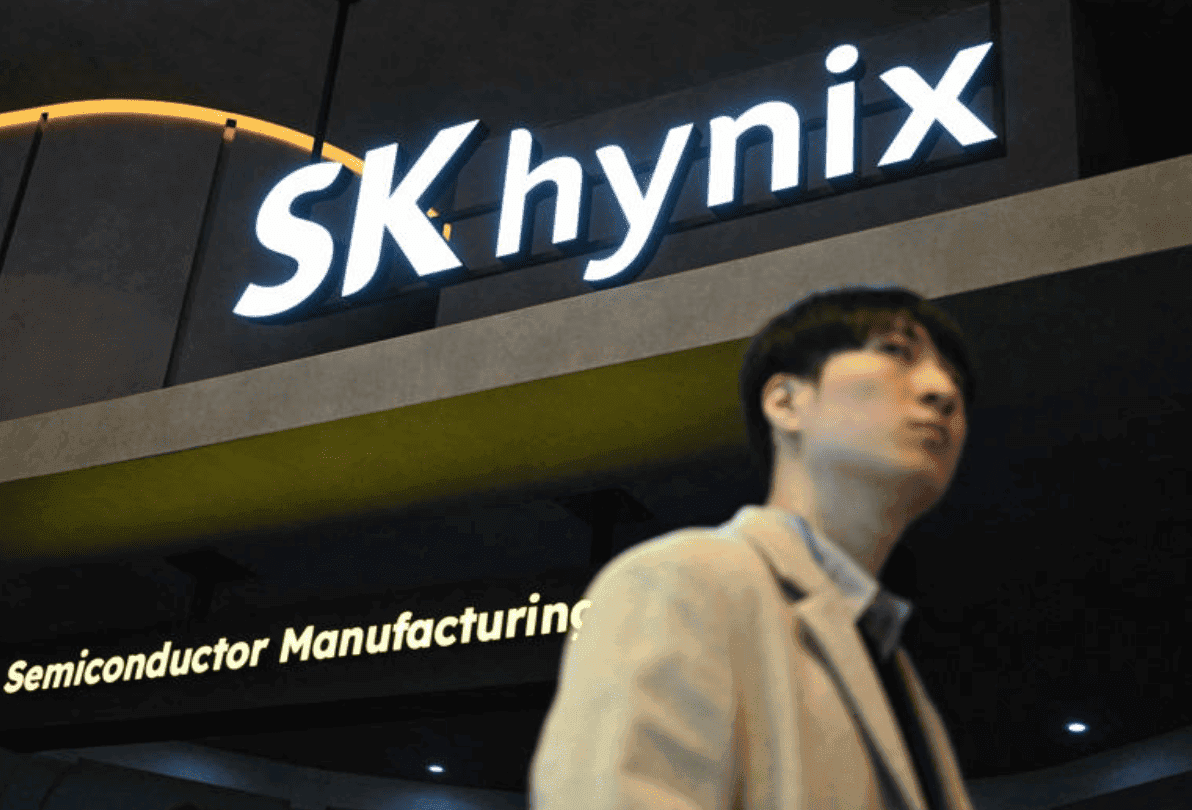
Samsung announced a 648 trillion won investment plan, approximately $480 billion in Korean semiconductor infrastructure, adding fuel to an already accelerating narrative around Korea's position at the center of the global AI memory supply chain. Combined with the broader government-backed semiconductor cluster initiative, the total capital being committed to Korean chip infrastructure is approaching $590 billion. SK Hynix stock responded immediately, as investors processed what that level of commitment means for the company that currently holds 58% of the global HBM market.
That number alone explains a lot about why SK Hynix stock has become one of the most searched names in global markets this week. But the Samsung announcement is only one of three catalysts that have converged simultaneously, and understanding all three is necessary to make sense of what is actually happening.
The Three Catalysts Driving SK Hynix Stock
Samsung's 648 trillion won investment announcement is the headline today, but it sits within a broader strategic framework that has been building for months. Korea is constructing what is intended to become the world's largest semiconductor industrial cluster, anchored by Samsung and SK Hynix as the two primary builders. The cluster encompasses new wafer fabrication facilities, advanced packaging infrastructure, and next-generation AI chip research and development.
For SK Hynix stock, the significance is not just the capital being deployed. It is what the commitment signals about Korea's long-term strategic positioning of SK Hynix as a core asset in the global AI infrastructure supply chain. Governments do not direct hundreds of billions of dollars into a company they expect to lose its competitive position. The investment is a statement about where Korea believes the AI memory market is heading and who it expects to capture the largest share of that market.
HBM Demand That Keeps Accelerating
The second catalyst is the demand environment that Micron's record earnings confirmed just days ago. Micron reported quarterly revenue and guidance that shocked even the most optimistic analyst models, and the read-across for SK Hynix was immediate and direct. Both companies operate in the same HBM supply-constrained market. What is good for Micron's margins is good for SK Hynix's margins.
Counterpoint Research data released on June 25 confirmed SK Hynix's dominance in the HBM market with 58% revenue share in Q1 2026, with Samsung and Micron each holding 21%. Nvidia CEO Jensen Huang confirmed that all three suppliers have passed qualification and begun HBM4 production for the Vera Rubin platform, but SK Hynix's lead position means it captures the largest share of the most profitable segment in memory.
Reuters survey data released this week showed Korean semiconductor exports growing approximately 188% year over year in June, on pace for the fastest export growth in nearly 50 years. That number is not a stock market metric. It is physical goods crossing borders, which is the most direct confirmation available that HBM demand is as real as the financial results suggest.
The Nasdaq ADR Catalyst
The third piece is the $29.4 billion Nasdaq ADR listing that SK Hynix announced last week and which continues generating investor interest. The company plans to issue approximately 17.79 million new shares in American depositary receipt form, with pricing expected around $166 per ADR. HSBC analysts have suggested the stock could be worth approximately 20% more than the IPO price, implying a fair value closer to $200 per ADR.
The strategic logic is straightforward. SK Hynix has been one of the best-performing semiconductor stocks in the world over the past year, up over 800% on a trailing 12-month basis and over 300% year to date in 2026. But its Korea-only listing has made it inaccessible to a large portion of global institutional capital that cannot or will not invest in Korean-listed stocks. The ADR removes that barrier and is expected to narrow the valuation gap that has historically existed between SK Hynix and its US-listed peer Micron.
What SK Hynix Actually Is
For investors encountering the name for the first time through this week's news, some context is useful.
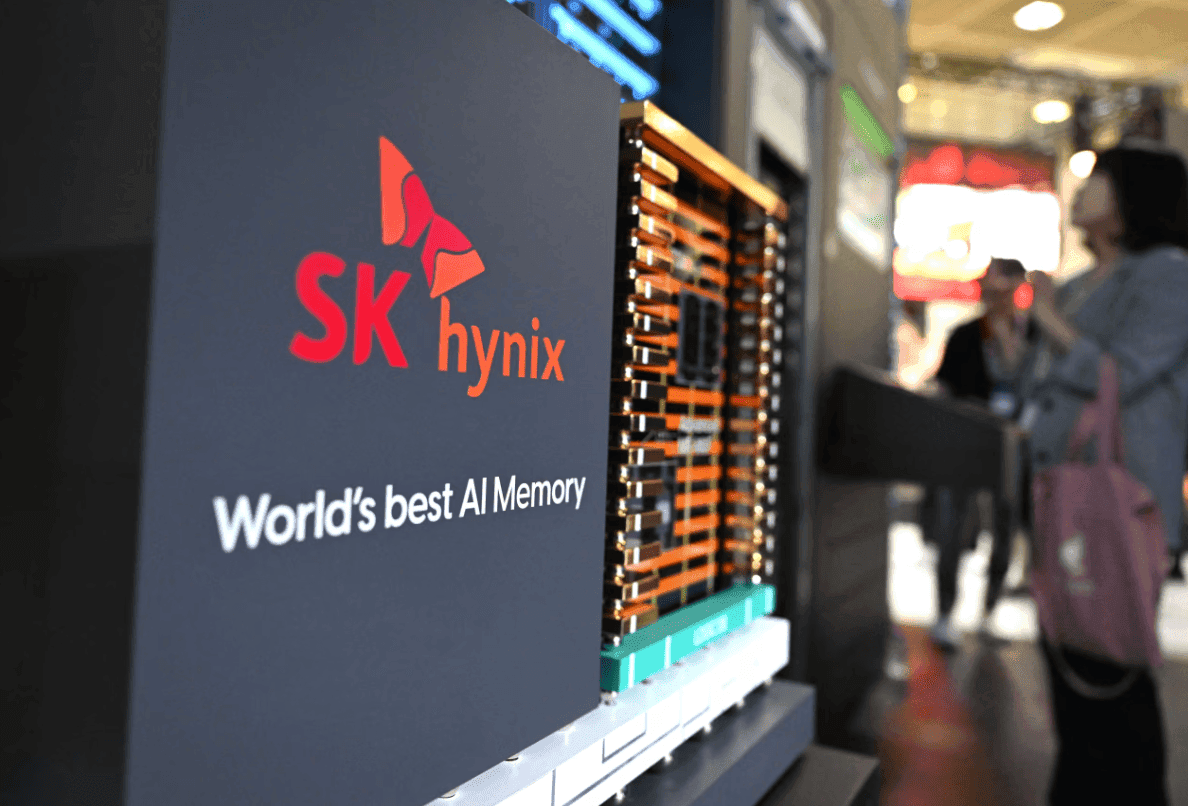
SK Hynix is a South Korean semiconductor company founded in 1983 as Hyundai Electronics and integrated into the SK Group in 2012. It is one of the three dominant global memory manufacturers alongside Samsung and Micron, and it has emerged as the clear leader in HBM — the high-bandwidth memory technology that stacks multiple layers of DRAM in close proximity to AI chips and has become essential infrastructure for large language model training and inference.
The company's customers include Nvidia, Microsoft, Apple, Dell, HP, and virtually every major technology company that builds or operates AI infrastructure. Its products are not consumer-facing in any meaningful sense. They are the components inside the servers that run the AI applications that consumers use.
SK Hynix's Q1 2026 results showed the scale of what AI memory demand has done to the business. Revenue grew 198% year over year. Operating profit grew 405% year over year. Operating margin reached 72%, which was higher than Nvidia's 65% in the same period. For a memory company, which has historically been associated with thin margins and brutal cyclicality, those numbers represent something genuinely new.
The Historic Market Cap Milestone
One specific development from this week deserves attention because of what it signals about how the market is reassessing SK Hynix's long-term position.
On June 22, during intraday trading, SK Hynix's market capitalization briefly surpassed Samsung Electronics to become the most valuable listed company on the KOSPI. This marked the first time since November 2000 that Samsung had lost that position. In Korea, where Samsung has been a symbol of national economic achievement for decades, the moment carried significance that went beyond a simple stock price comparison.
The market was saying something specific: SK Hynix's position in the AI memory supply chain is now valued more highly than Samsung's diversified semiconductor and consumer electronics empire. That revaluation reflects the premium the market is placing on HBM dominance specifically, and it reinforces why the Korea chip mega plan's focus on SK Hynix as a strategic anchor matters.
The Volatility Context
Any honest assessment of SK Hynix stock has to include what happened on June 23.
The stock fell over 12% in a single session, dragging the KOSPI down nearly 10% and triggering a sell-off that spread across Asian and European markets. The move had nothing to do with SK Hynix's fundamentals. It was a broad risk-off reaction driven by global macro concerns that hit the most momentum-driven names hardest.
That kind of volatility is a feature of investing in a stock that has tripled in a single year, not a bug. The same characteristics that produce 12% single-day gains also produce 12% single-day losses. Investors considering SK Hynix stock through the ADR need to understand that the volatility profile is significantly higher than what they would experience with a more mature, slowly growing semiconductor company.
The recovery since June 23 has been sharp, driven by Micron's earnings and today's Samsung announcement. But the June 23 move is a reminder that SK Hynix stock can move in both directions with the same speed.
How to Access SK Hynix Stock
For investors outside Korea, direct access to SK Hynix stock has historically required navigating Korean brokerage infrastructure. The pending Nasdaq ADR changes that picture significantly.
Once the ADR lists, US and European investors will be able to buy SK Hynix through standard brokerage accounts the same way they buy Micron or Nvidia. The ADR at approximately $166 per share, with HSBC's fair value estimate around $200, gives investors a clearer entry point framework than the Korean won-denominated stock has historically provided.
For investors who want exposure before the ADR lists, the iShares MSCI South Korea ETF holds SK Hynix as its largest position at approximately 30% of the fund. The Franklin FTSE South Korea ETF also holds SK Hynix at roughly 31% weighting. Both have gained over 90% since the start of 2026, which gives some indication of how much SK Hynix has contributed to Korean market performance this year.
For investors tracking stock, WEEX provides access to stock trading products, including the First Stock Trade Protected campaign offering eligible users additional protection on their first stock trade.
What Investors Should Actually Watch
The catalysts that drove this week's move are visible and well-covered. The signals that will tell you whether the thesis holds over the next several quarters are more specific.
HBM4 yield rates and production ramp at SK Hynix, Samsung, and Micron will determine the pricing environment through the remainder of 2026. If all three suppliers ramp faster than AI demand absorbs the new supply, pricing power begins to normalize. If demand keeps running ahead of supply as Micron's CEO suggested, the extraordinary margin environment extends.
The ADR pricing and initial trading will give the first real read on how US institutional investors value SK Hynix relative to Micron. If the ADR prices at or above $166 and trades higher in the first sessions, it confirms the valuation gap thesis. If it struggles to hold the IPO price, it signals that global investors are more cautious on Korean memory exposure than the domestic stock price implies.
Samsung's investment execution timeline matters. A 648 trillion won commitment is a statement. The actual capital deployment schedule determines when new supply comes online and how it affects the competitive dynamics between Samsung and SK Hynix in HBM specifically.
Conclusion
SK Hynix stock is moving on a genuine convergence of positive catalysts — Korea's semiconductor mega investment, the strongest HBM demand environment in memory industry history, and a Nasdaq ADR that will open the stock to global institutional capital for the first time.
The business case is as strong as it has ever been. Operating margins exceeding Nvidia's, 58% HBM market share, and a government actively investing in its long-term competitive position create a foundation that is difficult to dismiss.
The risk that deserves equal acknowledgment is the price at which all of that optimism is already reflected. A stock up 300% in a single year, briefly surpassing Samsung as Korea's most valuable company, and preparing a $29 billion international listing is a stock where a great deal of the good news is already in the price. The June 23 volatility showed how quickly sentiment can shift when macro conditions change.
For investors evaluating SK Hynix stock through the upcoming ADR, the question is not whether the company is exceptional. It clearly is. The question is what price that exceptionalism is worth, and whether the current level leaves enough margin for the inevitable volatility that comes with owning one of the highest-momentum names in global markets.
FAQ
1. What is SK Hynix stock and why is it surging?
SK Hynix is a South Korean memory semiconductor company and the world's largest HBM supplier with 58% market share. The stock is surging on Korea's $590 billion semiconductor investment plan, record HBM demand confirmed by Micron's earnings, and a $29 billion Nasdaq ADR announcement.
2. What is the Korea $590 billion chip plan?
It combines Samsung's 648 trillion won investment announcement with the broader Korean government-backed semiconductor cluster initiative. The plan aims to build the world's largest semiconductor industrial cluster anchored by Samsung and SK Hynix.
3. How can US investors buy SK Hynix stock?
SK Hynix is preparing a Nasdaq ADR listing expected to price around $166 per share. Before the ADR lists, exposure is available through the iShares MSCI South Korea ETF where SK Hynix is the largest holding at approximately 30%.
4. What is HBM and why does SK Hynix dominate it?
High Bandwidth Memory stacks multiple DRAM layers in close proximity to AI chips, enabling the data throughput that large language models require. SK Hynix holds 58% of global HBM revenue share, with Samsung and Micron each at 21%.
5. Is SK Hynix stock a buy after the recent surge?
The business fundamentals are exceptional but a stock up 300% in a single year has already priced in significant optimism. The upcoming ADR pricing will give investors the clearest signal yet of how global institutional capital values SK Hynix relative to its US-listed peers.
Disclaimer
This content is provided for general informational and educational purposes only and should not be considered financial, investment, legal, or tax advice. Nothing in this article constitutes an offer, recommendation, solicitation, or invitation to buy, sell, or trade any crypto asset or use any specific service. Crypto assets are highly volatile and involve risk, including the potential loss of capital. WEEX services may not be available in all regions and are subject to applicable laws, regulations, and user eligibility requirements. Please carefully assess risks and confirm local requirements before making any financial decisions.
You may also like
How to Use DEXTools to Avoid Crypto Scams and Fake Tokens
DEXTools can dramatically cut your risk on decentralized exchanges by surfacing contract red flags, liquidity health, and trading…
DEXTools Pair Explorer Explained: How to Read On-Chain Data Like a Pro
This guide shows you how to use DEXTools Pair Explorer to read on-chain data with confidence. You’ll learn…
BlockDAG Mining Explained: How to Mine BDAG and Is It Worth It in 2026?
This guide breaks down how BlockDAG mining works, the gear options (CPU/GPU or official rigs), expected rewards, and…
BlockDAG Tokenomics Explained: Supply, Distribution and What It Means for Price
This guide breaks down BlockDAG (BDAG) tokenomics—total supply, distribution, halving-style emissions, and vesting—so you can judge potential price…
BDAG Price Analysis: What Is Driving BlockDAG Price Right Now
BlockDAG is a Layer-1 built on DAG architecture, and its BDAG token is trading in a tight band…
How to Use DEXTools to Research a Token Before You Buy
DEXTools helps you evaluate any DEX token before committing capital. This guide shows how to find the right…
What Is DEXTools? The Beginner’s Guide to On-Chain Token Analysis
DEXTools is a real-time analytics platform for decentralized exchanges (DEXs). It helps you research new tokens, track liquidity,…
How to Spot a Rug Pull on DexScreener: Red Flags Every Trader Should Know
Rug pulls thrive in fast-moving memecoin markets, but you can filter many of them in minutes using DexScreener.…
America250 Coin Price Analysis: Is the Hype Still Alive Days Before the July 4 Snapshot?
America250 Coin price analysis 2026: Will the July 4 snapshot trigger a rally or crash? Get the latest America250 Coin price, risks, and post-event outlook.
Mexico vs England Crypto Odds: Azteca Factor and the Divergence Between Traditional and Blockchain Prediction Markets
Mexico vs England crypto odds: Azteca factor narrows the gap. Get match analysis, score predictions, and crypto odds movement for this Round of 16 clash.
SNDK Stock Price Prediction 2026-2030: Can SNDK Stock Reach $3,000 on AI Storage Demand?
SNDK stock price prediction 2026: Can Sandisk reach $3,000? Get analyst targets, key drivers, and learn how to trade SNDK stock on WEEX TradFi 24/7.
DexScreener vs DEXTools: Which Token Screener Is Better for Crypto Traders?
DexScreener and DEXTools are the two most-used token screeners for onchain traders. This guide compares their data coverage,…
How to Use DexScreener to Find New Tokens Before They Pump
This guide shows you how to use DexScreener’s real-time tools—especially the New Pairs tab—to spot fresh listings with…
What Is DexScreener? The Beginner’s Guide to Reading DEX Data in 2026
DexScreener is a free, real‑time dashboard for decentralized exchange (DEX) pairs across dozens of blockchains. This guide shows…
What is Strategy(MSTR) Coin? Everything You Need to Know about MSTR/USDT Perpetual Futures on WEEX
This guide explains what Strategy (MSTR) Coin represents on WEEX, why the MSTR/USDT perpetual futures track equity momentum…
Can MSTR Reach $150 in 2026? MSTR Price Prediction
KEY TAKEAWAYS Current MSTR/USDT futures price: $103.49 at publication time. Required move to hit $150: about +45% from…
SNDK Stock Price Prediction 2030: Can Sandisk Reach $5,000?
Sandisk has become one of the most volatile AI memory and storage-linked stocks. This SNDK stock forecast looks at whether Sandisk can reach $5,000 by 2030, what needs to happen, and which risks traders should watch.
Sandisk Stock Forecast 2026: Can SNDK Recover From $1,843.99 and Reach $3,000?
Sandisk is trading around $1,843.99 after a 7.05% drop, putting the $3,000 target back in focus. This SNDK stock forecast explains the upside math, key support levels, catalysts, and risks for 2026.
How to Use DEXTools to Avoid Crypto Scams and Fake Tokens
DEXTools can dramatically cut your risk on decentralized exchanges by surfacing contract red flags, liquidity health, and trading…
DEXTools Pair Explorer Explained: How to Read On-Chain Data Like a Pro
This guide shows you how to use DEXTools Pair Explorer to read on-chain data with confidence. You’ll learn…
BlockDAG Mining Explained: How to Mine BDAG and Is It Worth It in 2026?
This guide breaks down how BlockDAG mining works, the gear options (CPU/GPU or official rigs), expected rewards, and…
BlockDAG Tokenomics Explained: Supply, Distribution and What It Means for Price
This guide breaks down BlockDAG (BDAG) tokenomics—total supply, distribution, halving-style emissions, and vesting—so you can judge potential price…
BDAG Price Analysis: What Is Driving BlockDAG Price Right Now
BlockDAG is a Layer-1 built on DAG architecture, and its BDAG token is trading in a tight band…
How to Use DEXTools to Research a Token Before You Buy
DEXTools helps you evaluate any DEX token before committing capital. This guide shows how to find the right…