
NVIDIA Stock Price After Split: What Investors Have Learned




The Nvidia stock price after split became one of the more closely watched stories in markets after the company's 10-for-1 split in 2024. Headlines everywhere, retail investors flooding in, the share price suddenly looking more "affordable" at a tenth of what it was the day before. For a lot of newer investors, it felt like something significant had just happened.
What followed is where the real story is. The Nvidia stock price after split kept climbing — not because splits create value, but because the underlying business kept delivering in ways that justified higher valuations quarter after quarter. Looking back from where we are now, the Nvidia stock price after split tells a more instructive story about how markets actually work than the split event itself ever did.
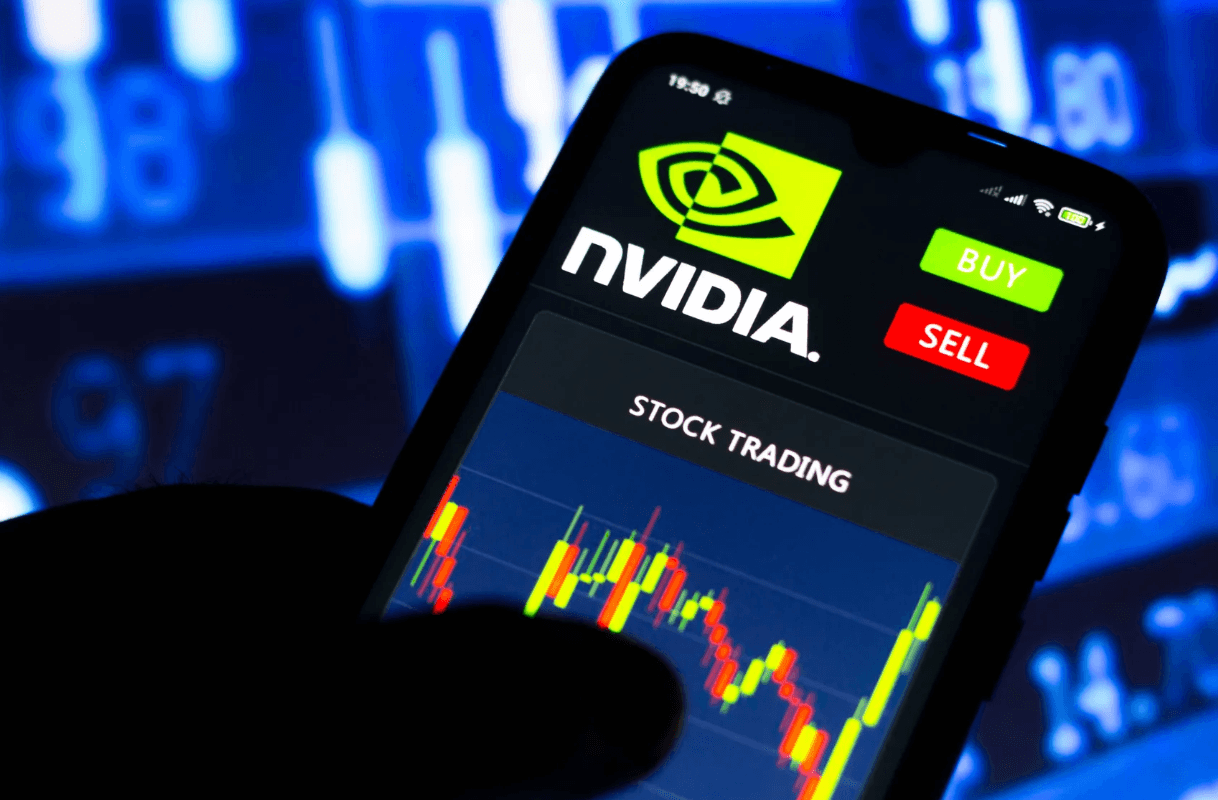
Does a Stock Split Actually Increase NVIDIA's Value?
This sounds obvious when you say it plainly, but the excitement around NVIDIA's split made it easy to lose sight of.
When a company does a 10-for-1 split, you end up with ten shares for every one you held before. The price of each share drops to one-tenth of what it was. The total value of your position hasn't changed. The company's market cap hasn't changed. Nothing fundamental has changed — the business is identical on the day after the split to what it was the day before.
What changed is accessibility. A share that previously cost several hundred dollars now costs a fraction of that, which makes it easier for retail investors to buy in without having to purchase fractional shares. That's a real and meaningful thing, but it's a psychological and mechanical change, not a financial one.
NVIDIA's post-split performance eventually made this clear. The split was a footnote. The business was the story.
What Really Drove NVIDIA Stock Price After Split
The reason NVIDIA's stock kept climbing after the split had nothing to do with the split. It had everything to do with what the company kept reporting every quarter.
Revenue growth that kept surprising to the upside. Profit margins that expanded as AI infrastructure demand accelerated. Data center revenue that went from a meaningful segment to the dominant driver of the entire business. Institutional investors don't hold a position through multiple earnings cycles because a company divided its shares — they hold because the numbers keep justifying the valuation.
This is the lesson that tends to separate investors who did well with NVIDIA from those who bought in around the split expecting the event itself to carry the stock. The split attracted attention. The earnings kept it there.
How AI Transformed the NVIDIA Investment Case
Before the AI boom, most people thought of NVIDIA as a gaming company. Great graphics cards, strong margins, loyal customer base — but a fairly narrow identity in terms of what it meant for the broader technology landscape.
That identity changed faster than almost anyone predicted. The same GPUs that rendered video game graphics turned out to be extraordinarily well-suited for the matrix calculations at the heart of AI training. NVIDIA had the hardware, the software ecosystem through CUDA, and years of developer relationships built around a platform that suddenly became the infrastructure backbone of the most important technology trend in decades.
The split happened right in the middle of that transition, which created a misleading correlation for some investors. AI demand was accelerating, the stock was rising, the split was happening — it was easy to mentally link all three as part of the same story. In reality, the AI adoption curve was doing the heavy lifting, and the split was just happening at the same time.
Understanding that distinction matters, because it shapes how you think about what actually drives a technology stock over time.
Why Investor Psychology Matters After a Stock Split
Stock splits do influence behavior, even if they don't influence fundamentals. That's worth acknowledging rather than dismissing.
A lower share price does make a stock feel more accessible, particularly to retail investors who think in terms of whole shares rather than portfolio percentages. It generates media coverage. It can bring in a wave of new participants who weren't paying attention before. For NVIDIA, the split helped pull in a broader retail audience at a moment when the AI story was starting to reach mainstream consciousness.
But here's what actually happened: the retail attention that came in around the split either stayed or left based on what NVIDIA did with its business afterward. Investors who came in because the share price looked affordable and then watched the company deliver quarter after quarter of strong results — they stayed. Psychology might get people in the door, but execution is what keeps them there.
This is probably the most practically useful takeaway for anyone thinking about stock splits more generally. The short-term attention is real. Whether it translates into sustained demand depends entirely on whether the business deserves it.
What Long-Term Investors Learned From NVIDIA Stock Price After Split
A few years removed from the split, almost nobody is talking about it anymore. That's telling.
What people are talking about is whether AI infrastructure spending can sustain its current trajectory, whether NVIDIA can maintain its technology lead as competitors pour resources into alternative AI chips, and what the next generation of data center architecture looks like. These are the questions that determine where the stock goes from here — not the mechanics of a share division that happened in 2024.
This is how it tends to work with major corporate events. They generate noise in the short term, and that noise can move a stock. But the noise fades, and what remains is the underlying business. NVIDIA's continued investment in AI computing, enterprise infrastructure, networking technology, and next-generation platforms has had a far greater impact on where the stock trades today than the split ever did.
For investors who bought NVIDIA before or around the split and held — the returns have been strong. But the attribution for those returns belongs to the AI buildout, the earnings execution, and the competitive moat NVIDIA has built through CUDA and its developer ecosystem. The split was a convenient on-ramp for more investors to participate. The business is what made participation worthwhile.
What to Watch With NVIDIA Stock in 2026
The post-split chapter is largely behind us. The questions investors are focused on now are forward-looking and more complex than anything the split itself raised.
Can AI infrastructure spending continue at its current pace, or is the market approaching a saturation point for near-term data center buildout? Will enterprise AI adoption — the deployment of AI across actual business workflows rather than just model training — accelerate in a way that creates new demand cycles? Can NVIDIA hold its position as AMD, Google, Amazon, and others invest heavily in alternative AI chip architectures? And what does the competitive landscape look like in two or three years when some of those alternatives have had time to mature?
These are the real NVIDIA questions for 2026 and beyond. The split was a milestone in a longer story — one that turns out to have been mostly about artificial intelligence reshaping the economics of computing, with NVIDIA sitting at the center of it.
NVIDIA remains one of the most closely watched names in semiconductors alongside AMD, Broadcom, Micron, Intel, Qualcomm, and TSMC. For investors tracking this space, WEEX provides access to a wide range of US stock trading products and is running its First Stock Trade Protected campaign, offering eligible users additional protection on their first qualifying US stock trade. Platform feature only — not investment advice.
For investors interested in stocks, WEEX provides access to stock trading products. WEEX is also running its First Stock Trade Protected campaign, offering eligible users additional protection on their first qualifying US stock trade. The campaign is presented as a platform feature only and should not be interpreted as financial or investment advice.
Conclusion
The NVIDIA stock split generated attention it probably didn't fully deserve on its own merits. What it did was open the door for more investors to participate in a company that happened to be in the right position at one of the more significant inflection points in technology history.
The real lessons from the post-split period aren't about stock splits at all. They're about what happens when a company has the right technology at the right moment, executes consistently through multiple earnings cycles, and builds a competitive position that's genuinely difficult to replicate. That combination is what drove NVIDIA's performance. The split was just the event that got more people paying attention when it mattered.
FAQ
1. Did NVIDIA's stock split increase the company's value?
No. The split changed the number of shares outstanding and adjusted the price per share proportionally, but the company's total market value remained the same immediately after.
2. Why did NVIDIA stock continue rising after the split?
Strong earnings growth, accelerating AI infrastructure demand, and continued leadership in semiconductor technology — not the split itself — drove the sustained performance.
3. What is the biggest lesson from NVIDIA's post-split performance?
That long-term stock performance is determined by business fundamentals. The split improved accessibility and generated attention, but the earnings and AI demand are what actually moved the stock.
4. Does a stock split make a stock a better investment?
Not inherently. It makes shares more accessible and can attract more retail participation, but it doesn't change the company's financial position, earnings power, or competitive advantages.
5. What should investors watch with NVIDIA going forward?
AI infrastructure spending trajectories, enterprise AI adoption, competitive pressure from alternative chip architectures, and NVIDIA's ability to maintain its technology and software ecosystem lead.
Disclaimer
This content is provided for general informational and educational purposes only and should not be considered financial, investment, legal, or tax advice. Nothing in this article constitutes an offer, recommendation, solicitation, or invitation to buy, sell, or trade any crypto asset or use any specific service. Crypto assets are highly volatile and involve risk, including the potential loss of capital. WEEX services may not be available in all regions and are subject to applicable laws, regulations, and user eligibility requirements. Please carefully assess risks and confirm local requirements before making any financial decisions.
You may also like
NVIDIA Stock Forecast 2026: Is NVDA Still a Good Investment After the $4 Trillion AI Rally?
NVIDIA stock remains one of the market’s most watched AI trades. This NVDA stock forecast reviews whether NVIDIA is still a good investment in 2026, what could drive the stock higher, and which risks traders should watch.
France vs. Morocco Prediction 2026: World Cup Quarterfinal Crypto Odds
France vs. Morocco prediction 2026: World Cup quarterfinal crypto odds, betting analysis & final score forecast. Who will win France vs. Morocco? Expert match insights.
What is Navitas Semiconductor(NVTS) Coin? Everything You Need to Know to Trade NVTS/USDT Futures on WEEX
This guide explains Navitas Semiconductor (NVTS), why GaN/SiC power chips matter, and how to trade the NVTS/USDT perpetual…
Can NVTS Reach $20 in 2026? NVTS Price Prediction & Forecast — July 2026
KEY TAKEAWAYS Current price: NVTS futures trade around $14.73 per contract today based on live market data. Required…
Navitas Semiconductor (NVTS) Price Prediction (July 2026): Forecast and Trading Outlook for NVTS/USDT Perpetual Futures
Navitas Semiconductor (NVTS) has drawn fresh attention as AI data centers and EV fast-charging keep GaN/SiC power chips…
Norway vs. Brazil World Cup Upset: Crypto Odds & Prediction Market Reaction
Norway vs. Brazil World Cup upset: Crypto odds analysis, prediction market reaction, Erling Haaland's 7 goals & quarter-final outlook. Norway World Cup crypto odds explained.
Portugal vs. Spain Prediction 2026: Who Wins the Iberian Derby?
Portugal vs. Spain prediction 2026: Expert analysis, crypto odds, betting trends & final score forecast. Who will win Portugal vs. Spain?
Polymarket Prediction Guide: How the Odds Actually Work in 2026
A Polymarket prediction is a live crowd-set price, not a promise. See how the odds work, how accurate they really are, and what changed in 2026.
Cathie Wood's Tesla Stock Purchases: Why ARK Keeps Buying the Dip
Cathie Wood's Tesla stock purchases explained — ARK's July 2026 $38M dip buy, price targets, and the Bitcoin angle most coverage skips.
Portugal vs Spain Prediction Market: Reading the World Cup Odds
Portugal vs Spain meets in the World Cup 2026 Round of 16. See how Polymarket and Kalshi prediction markets priced the Iberian derby and Spain's edge.
USA vs Belgium Polymarket Odds: How to Read the R16 Market
The USA vs Belgium Polymarket market prices Monday's World Cup R16 tie near a coin flip. See the live odds, what the cents mean, and how to read them.
Texas Instruments Stock Price Prediction 2026: Can TXN Deliver More Upside?
Texas Instruments stock price prediction 2026: TXN stock analysis, analyst targets, free cash flow forecast, and whether to invest in TXN. Complete guide to Texas Instruments stock.
USA vs. Belgium Prediction 2026: World Cup Crypto Odds & Betting Analysis
USA vs. Belgium prediction 2026: Expert analysis, crypto odds, betting trends & final score forecast. Who will win USA vs. Belgium? World Cup Round of 16 match insights.
SIVE Stock Price Prediction 2026–2027: Can It Be the Next LITE?
SIVE stock price prediction 2026–2027: Explore AI photonics growth, CPO demand, LITE comparison, price trends, opportunities, and key risks.
What Is MANLET Crypto? The Solana Black Bull Meme Coin Explained
Discover what MANLET Crypto is, the Solana Black Bull meme coin, its contract address, Ansem community connection, market growth, and key risks to know.
America 250 Price Forecast: Can America 250 Reach $1 by End of 2026?
America 250 price prediction 2026: Expert analysis on can America 250 reach $1, USA250 crypto price analysis, market trends & realistic targets.
Brazil vs. Norway Prediction & Crypto Odds: Who Wins the Round of 16?
Brazil vs. Norway prediction 2026: Expert analysis, crypto odds, betting trends & final score forecast. Who will win Brazil vs. Norway? World Cup Round of 16 match insights.
Spain vs. Portugal Prediction: Who Will Win? Crypto Odds, Betting Analysis & Match Preview
Spain vs. Portugal predictions 2026: Expert analysis, crypto odds, betting trends & final score forecast. Who will win Spain vs. Portugal? World Cup Round of 16 match insights.
NVIDIA Stock Forecast 2026: Is NVDA Still a Good Investment After the $4 Trillion AI Rally?
NVIDIA stock remains one of the market’s most watched AI trades. This NVDA stock forecast reviews whether NVIDIA is still a good investment in 2026, what could drive the stock higher, and which risks traders should watch.
France vs. Morocco Prediction 2026: World Cup Quarterfinal Crypto Odds
France vs. Morocco prediction 2026: World Cup quarterfinal crypto odds, betting analysis & final score forecast. Who will win France vs. Morocco? Expert match insights.
What is Navitas Semiconductor(NVTS) Coin? Everything You Need to Know to Trade NVTS/USDT Futures on WEEX
This guide explains Navitas Semiconductor (NVTS), why GaN/SiC power chips matter, and how to trade the NVTS/USDT perpetual…
Can NVTS Reach $20 in 2026? NVTS Price Prediction & Forecast — July 2026
KEY TAKEAWAYS Current price: NVTS futures trade around $14.73 per contract today based on live market data. Required…
Navitas Semiconductor (NVTS) Price Prediction (July 2026): Forecast and Trading Outlook for NVTS/USDT Perpetual Futures
Navitas Semiconductor (NVTS) has drawn fresh attention as AI data centers and EV fast-charging keep GaN/SiC power chips…
Norway vs. Brazil World Cup Upset: Crypto Odds & Prediction Market Reaction
Norway vs. Brazil World Cup upset: Crypto odds analysis, prediction market reaction, Erling Haaland's 7 goals & quarter-final outlook. Norway World Cup crypto odds explained.