
Is Nvidia Stock Overvalued in 2026? Or Is NVDA Still Worth Buying?


At some point, every market leader faces the same question.Not: “Is this a great company?” But: “Has the stock become too expensive?” That conversation is now happening around Nvidia stock.
Few companies have benefited more from the artificial intelligence boom. Nvidia has become one of the biggest winners of the AI era, with demand for its chips helping drive explosive revenue growth and enormous investor enthusiasm.
But as Nvidia stock continues attracting attention, concerns about valuation are becoming harder to ignore. The question investors increasingly ask is simple: Is Nvidia stock overvalued in 2026?
The answer depends on how much future growth investors believe is still ahead.
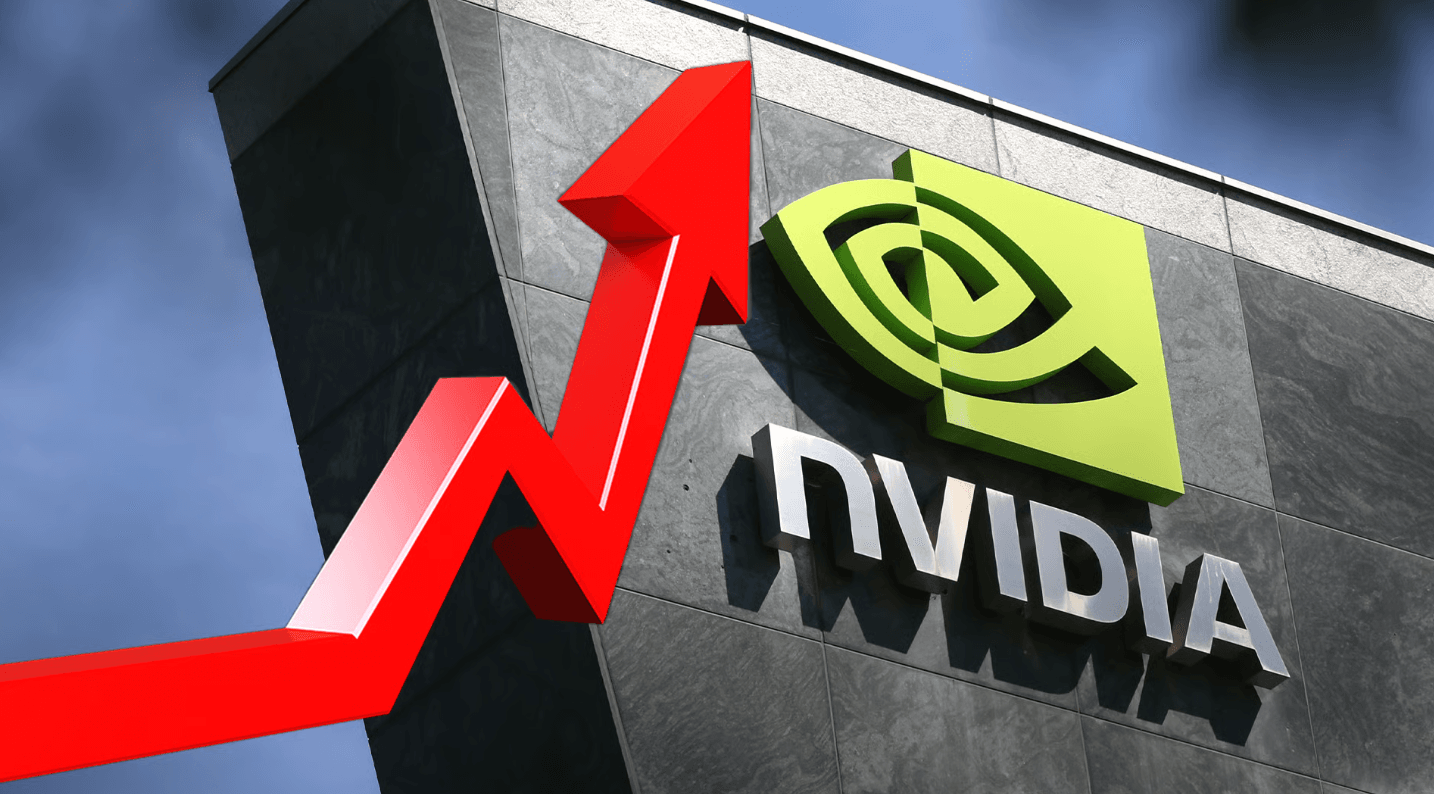
Why Some Investors Think Nvidia Stock Is Overvalued
The argument that Nvidia stock may be overvalued starts with expectations. Markets do not price stocks based on what companies are doing today. They price stocks based on what investors expect companies to achieve tomorrow.
In Nvidia’s case, expectations have become extremely ambitious. Many investors already assume artificial intelligence spending will remain strong for years, major cloud providers will continue buying large amounts of Nvidia hardware, and profit growth will remain unusually high.
That creates pressure. When expectations become very high, companies no longer need to disappoint to trigger volatility. Sometimes simply being “very good” instead of “extraordinary” can pressure a stock price.
This is one reason valuation debates around Nvidia stock continue growing. Some investors worry that much of the AI opportunity has already been priced in.
The AI Premium: Why Nvidia Stock Trades Differently
At the same time, Nvidia stock is not being valued like an average semiconductor company. Investors increasingly treat Nvidia as something different.
For many, Nvidia represents the infrastructure layer of artificial intelligence. Just as cloud computing created major long-term winners in previous technology cycles, many believe AI infrastructure could create a similar pattern. This explains why Nvidia stock often trades at premium valuations.
Markets are willing to pay more for companies they believe sit at the center of major structural shifts. The logic is straightforward: If artificial intelligence becomes deeply embedded into industries worldwide, Nvidia may continue benefiting from years of strong demand.
For bullish investors, valuation alone does not tell the whole story. Growth matters too. And Nvidia’s growth has been difficult to ignore.
Why Nvidia Stock Bulls Still Remain Confident
Supporters of Nvidia stock argue that traditional valuation concerns may underestimate the scale of the AI opportunity.
Artificial intelligence is still early. Many companies remain in the experimentation phase. Large technology firms continue spending aggressively on AI infrastructure, while industries including healthcare, cybersecurity, finance, manufacturing, and robotics are still expanding adoption.
For bullish investors, this creates a powerful argument: Nvidia may still be in the early innings of a much larger cycle.
Another reason bulls remain optimistic is profitability. Many fast-growing technology companies struggle to generate profits. Nvidia does not have that problem.
The company combines strong revenue growth with unusually high margins, giving investors more confidence in its long-term business model.
There is also a leadership argument. In technology, dominant companies often remain dominant longer than expected.
Markets repeatedly underestimate how difficult it is for competitors to catch companies with strong ecosystems and developer loyalty. That possibility keeps many investors confident about Nvidia stock.
Why Some Investors Are Becoming More Cautious
Still, not everyone believes Nvidia stock can continue climbing without challenges. One growing concern involves competition.
Companies including AMD continue investing heavily in AI chips, while Google, Amazon, Microsoft, and Meta increasingly explore internal alternatives. Even if Nvidia remains dominant, more competition could eventually pressure margins or reduce pricing power.
There is also concern around spending cycles. Today, cloud providers continue investing aggressively in artificial intelligence. But investors are beginning to ask: What happens if AI spending eventually slows?
Technology spending cycles rarely move upward forever. Periods of enthusiasm often cool once businesses begin focusing more heavily on efficiency and returns. Some investors worry Nvidia stock may eventually face that transition.
Macroeconomic conditions matter too. Higher interest rates or weaker market sentiment often pressure growth-oriented stocks, especially companies trading at premium valuations.
Even strong businesses are not immune to valuation resets.
Is Nvidia Stock Actually in a Bubble?
The word “bubble” gets used frequently whenever stocks rise quickly. But bubbles are difficult to define.
Some investors believe Nvidia stock resembles earlier technology manias, arguing that expectations have become too optimistic.
Others disagree. They argue Nvidia’s growth is backed by real earnings, strong cash flow, and genuine business demand rather than speculation alone.
That distinction matters. Unlike many historical bubbles, Nvidia continues producing substantial profits and remains deeply tied to real infrastructure demand.
The bigger question may not be whether Nvidia stock is a bubble. It may be whether the market has become too optimistic about how long current growth rates can continue. That is a very different debate.
Retail Investors Continue Watching Nvidia Stock Closely
For many newer investors, Nvidia stock has become one of the easiest ways to participate in the artificial intelligence trend.
As retail participation in technology stocks continues growing, market education and risk awareness are becoming increasingly important.
Some platforms, including WEEX, have introduced stock-focused features such as First Stock Trade Protected, reflecting growing interest among newer investors exploring major technology names with greater attention to volatility and risk management.
Understanding both opportunity and downside increasingly matters when investing in high-growth sectors.
Conclusion
So, is Nvidia stock overvalued in 2026? The honest answer is: It depends on what happens next.
If artificial intelligence demand continues growing rapidly and Nvidia maintains leadership, current valuations may eventually look justified.
But if growth slows, competition increases, or expectations become harder to meet, Nvidia stock could face more pressure than investors expect. The debate around Nvidia stock is no longer simply about whether the company is strong.
Most investors agree that it is. The real question is whether the future growth story is already priced in. For now, Nvidia stock remains one of the market’s biggest AI winners — but also one of its most closely watched valuation debates.
FAQ
1. Is Nvidia stock overvalued in 2026?
Some investors believe Nvidia stock trades at premium valuations due to high expectations around artificial intelligence growth, while others argue strong earnings justify the price.
2. Why is Nvidia stock so expensive?
Nvidia stock benefits from strong AI demand, high profit margins, and investor belief that Nvidia sits at the center of long-term artificial intelligence growth.
3. Could Nvidia stock still go higher?
Possibly. Continued AI adoption, strong earnings, and sustained infrastructure demand could support further growth.
4. What are the biggest risks for Nvidia stock?
Competition, slower AI spending, valuation pressure, and weaker macroeconomic conditions are among the biggest concerns.
5. Is Nvidia stock considered a bubble?
Opinions differ. Some investors worry expectations have become too optimistic, while others argue Nvidia’s earnings growth supports higher valuations.
Disclaimer
This content is provided for general informational and educational purposes only and should not be considered financial, investment, legal, or tax advice. Nothing in this article constitutes an offer, recommendation, solicitation, or invitation to buy, sell, or trade any asset or use any specific service. Markets are volatile and involve risk, including the potential loss of capital. WEEX services may not be available in all regions and are subject to applicable laws, regulations, and user eligibility requirements. Please carefully assess risks before making any financial decisions.
You may also like

Introducing Kaito ($KAITO): AI-Powered InfoFi Network and Price Prediction
Kaito is an AI-powered InfoFi platform, with KAITO drawing attention from mindshare products, governance, and unlock events.
$KAITO Airdrop on WEEX: Complete Guide to Kaito and Claim Free $KAITO
Kaito tokenomics support an AI-powered InfoFi network for attention, governance, and network currency, while eligible users can join the WEEX KAITO campaign to claim rewards from a 50,000 USDT prize pool before July 16, 2026 at 17:00 SGT.
Risks of Shorting Bitcoin You Should Know Before You Trade
Shorting can look simple: you profit when price falls. But the bitcoin short is different from buying because…
Shorting Bitcoin vs Buying Put Options: What’s the Difference
This guide breaks down two ways to express a bearish view on BTC: opening a bitcoin short with…
Prismevm (PP) Airdrop on WEEX: How to Unlock New User Rewards
This guide explains what Prismevm (PP) is, how the Prismevm (PP) airdrop on WEEX works, and a simple,…
How to Short Bitcoin: Methods and Platforms Compared
A bitcoin short lets you profit if BTC falls. This guide explains how to short bitcoin using futures,…
What Is Dollar-Cost Averaging (DCA)? A Beginner’s Guide
Dollar-cost averaging (DCA) is a simple strategy: invest a fixed amount on a fixed schedule, no matter the…
Why Did Semiconductor Stocks Crash Today? Is NVDA Stock a Buy Now
Semiconductor stocks sold off today after a long AI-driven run. This article explains the most likely catalysts behind…
PepsiCo Stock Price Prediction 2026: Can PEP Beat Q2 Earnings This Week
This piece offers a clear view of PepsiCo Stock Price Prediction 2026 and whether PEP can beat Q2…
JPMorgan Stock Price Prediction 2026-2030: Can JPM Reach 300 After July Earnings
This article lays out a data-driven JPMorgan Stock Price Prediction 2026-2030 with a clear look at whether JPM…
Delta Air Lines Stock Price Forecast 2026: Can DAL Stock Recover From Oil Spike
This article maps a practical path to a Delta Air Lines stock price forecast for 2026 by breaking…
Advanced Micro Devices (AMD) Stock Forecast 2026: Can AMD Reach 300 This Year
This article unpacks the Advanced Micro Devices (AMD) Stock Forecast 2026 with a simple, decision-focused framework. We explore…
What is the SOXL Stock and Who Should Actually Trade It After Crash
This guide explains what the SOXL stock is, how its 3x leverage really works, why it behaves differently…
Taiwan Semiconductor (TSM) Stock Price Prediction 2026-2030: Is TSM Safe to Buy
Taiwan Semiconductor Manufacturing Co. sits at the heart of the AI hardware boom, powering chips for Nvidia, Apple,…
SK Hynix Stock Forecast 2026: Can SK Hynix Recover and Reach New Highs
SK Hynix sits at the heart of the AI memory boom. This 2026 outlook explains how HBM leadership,…
Why is the PHLX Semiconductor Index SOX Dropping While Oil Prices Climb
Semiconductors are selling off while crude rises—a classic growth-versus-inflation standoff. This article explains why the PHLX Semiconductor Index…
SOXL Stock Price Prediction 2026-2030: Can SOXL Recover From July Tech Correction
SOXL Stock Price Prediction 2026-2030 comes down to one question: can semiconductors extend the AI boom after a…
Micron (MU) Stock Price Prediction 2026-2030: Can MU Reach 1500 After July Crash
This article unpacks the July pullback in Micron, builds a 2026–2030 Micron (MU) Stock Price Prediction using cyclical…
Introducing Kaito ($KAITO): AI-Powered InfoFi Network and Price Prediction
Kaito is an AI-powered InfoFi platform, with KAITO drawing attention from mindshare products, governance, and unlock events.
$KAITO Airdrop on WEEX: Complete Guide to Kaito and Claim Free $KAITO
Kaito tokenomics support an AI-powered InfoFi network for attention, governance, and network currency, while eligible users can join the WEEX KAITO campaign to claim rewards from a 50,000 USDT prize pool before July 16, 2026 at 17:00 SGT.
Risks of Shorting Bitcoin You Should Know Before You Trade
Shorting can look simple: you profit when price falls. But the bitcoin short is different from buying because…
Shorting Bitcoin vs Buying Put Options: What’s the Difference
This guide breaks down two ways to express a bearish view on BTC: opening a bitcoin short with…
Prismevm (PP) Airdrop on WEEX: How to Unlock New User Rewards
This guide explains what Prismevm (PP) is, how the Prismevm (PP) airdrop on WEEX works, and a simple,…
How to Short Bitcoin: Methods and Platforms Compared
A bitcoin short lets you profit if BTC falls. This guide explains how to short bitcoin using futures,…