
Solana Foundation: Three Key Strategic Directions for the Integration of AI and Crypto


Original Article Title: Focus areas at the intersection of crypto and AI
Original Article Author: Kuleen, Head of DePIN at Solana Foundation
Original Article Translation: Yuliya, PANews
The intersection of AI and cryptographic technology is currently entering a "Cambrian explosion" experimental stage. This article by the Solana Foundation elaborates on the three key development directions of AI + crypto integration.
TLDR
1. Building the most vibrant AI Agent-Driven Economy on Solana
Truth Terminal has already demonstrated the feasibility of AI agents operating on-chain. The experimentation in this area continues to push the boundaries of on-chain agent operation, showcasing not only immense potential but also a wide design space. This has already emerged as one of the most groundbreaking and explosive directions in the intersection of crypto and AI, and it is only the beginning.
2. Enhancing LLM's Capabilities in Solana Code Development
Large Language Models have already shown great promise in code writing and are expected to further improve in the future. Through these capabilities, Solana developers' efficiency is expected to increase by 2-10 times. Recently, establishing high-quality benchmarks to assess LLMs' understanding and writing of Solana code will help understand the potential impact of LLMs on the Solana ecosystem. High-quality model fine-tuning approaches will be validated in benchmark testing.
3. Supporting an Open and Decentralized AI Technology Stack
The "open and decentralized AI technology stack" includes the following key elements:
· Training data acquisition
· Training and inference computing capabilities
· Model weight sharing
· Model output verification capabilities
The importance of this open AI technology stack is reflected in:
· Accelerating model development innovation and experimentation
· Providing an alternative for users distrustful of centralized AI
1. Building the most vibrant AI Agent-Driven Economy
There has been significant discussion about Truth Terminal and $GOAT, making further elaboration unnecessary here. However, it is certain that when AI agents start engaging in on-chain activities, a world full of possibilities has already unfolded (it is worth noting that currently agents have not even directly taken action on-chain yet).
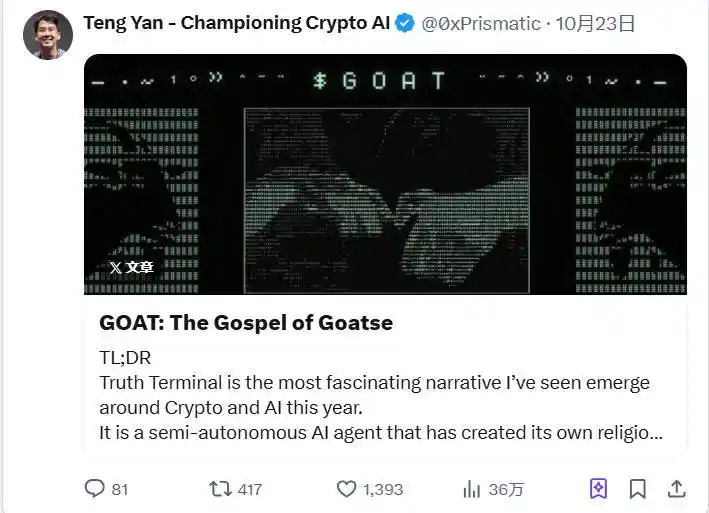
While it is currently difficult to predict the future development of on-chain agents' behavior, by observing the innovation that has already taken place on Solana, we can catch a glimpse of the vast potential of this design space:
· AI projects like Truth Terminal are developing new digital communities through meme coins like $GOAT
· Platforms such as Holoworld AI, vvaifu.fun, Top Hat AI, Alethea AI, among others, enable users to easily create and deploy intelligent agents and their associated tokens

· AI fund managers trained on prominent crypto investor traits are emerging, with the rapid rise of ai16z on the daos.fun platform, creating a new ecosystem for AI funds and agent supporters
· Furthermore, game platforms like Colony allow players to engage in unexpected innovative gameplay by guiding agent actions in the game
Future Directions
In the future, intelligent agents can manage complex projects that require multi-party economic coordination. For example, in the field of scientific research, agents could be tasked with searching for therapeutic compounds for specific diseases. Specifically:
· Fundraising through the Pump Science platform
· Utilizing raised funds to pay access fees for research data, computational costs for compound simulations on decentralized computing networks like kuzco, Render Network, io.net
· Recruiting human participants for experimental validation work through bounty platforms like Gib.Work (e.g., running experiments to validate/build upon simulation results)
In addition to complex projects, agents can also perform simple tasks such as building personal websites, creating artistic works (e.g., zerebro), expanding the limitless possibilities of their applications.
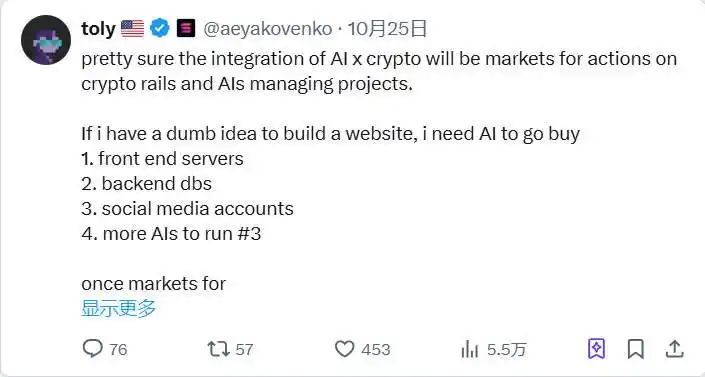
Why is On-Chain Agent Execution of Financial Activities More Meaningful Than Using Traditional Channels?
Agents can fully utilize both traditional financial channels and cryptocurrency systems simultaneously. However, cryptocurrency holds unique advantages in certain areas:
· Micropayment applications—Solana has excelled in this area, as demonstrated by applications like Drip
· Speed Advantage - instant settlement functionality, helping proxies achieve maximum capital efficiency
· Access to Capital Markets via DeFi - this may be the most compelling reason for proxies to participate in the crypto economy. When proxies need to engage in financial activities beyond payments, the advantages of cryptocurrency become even more apparent. Proxies can seamlessly mint assets, trade, invest, participate in yield farming, engage in lending operations, leverage, and more. Particularly, Solana, with its mainnet already hosting a myriad of top-tier DeFi infrastructure, is well-suited to support these capital market activities.
From a technological development perspective, path dependence plays a critical role. It is not so much about whether a product is optimal, but rather about who can first reach critical mass and become the default choice. As more and more proxies derive revenue from cryptocurrency, cryptographic connectivity is likely to become a core competency for proxies.
What the Foundation Hopes to See
The Solana Foundation hopes to see proxies equipped with crypto wallets engage in bold innovation experiments on-chain. The Foundation does not overly constrain specific directions here because the possibilities are so vast - the most interesting and valuable proxy use cases are likely still unforeseen.
However, the Foundation is particularly interested in exploring the following directions:
1. Risk Management Mechanism
· While the current model is impressive, it is still far from perfect
· Proxies cannot be given unrestricted freedom of action
2. Driving Non-Speculative Use Cases
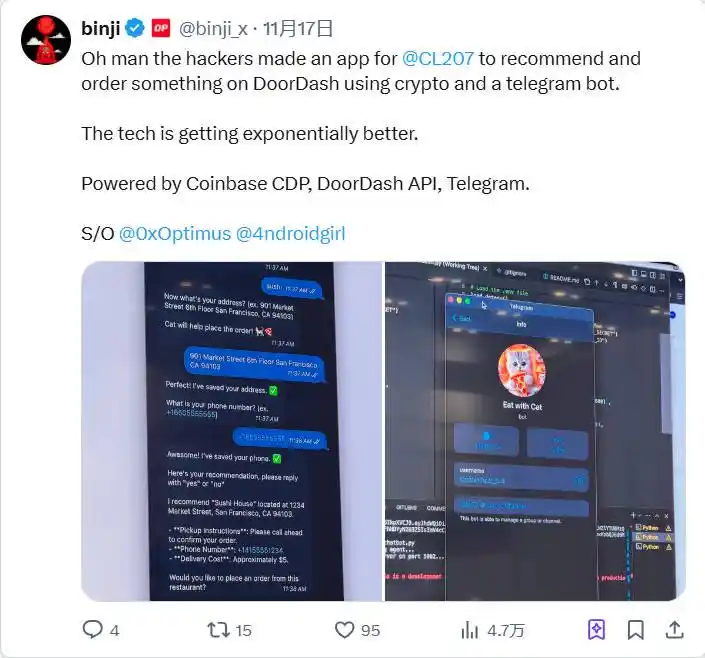
· Purchasing tickets via xpticket
· Optimizing stablecoin portfolio yields
· Ordering food on DoorDash
3. Development Progress Requirements
· Must have at least reached the prototype stage on the testnet
· Ideally already operational on the mainnet
2. Enhance LLMs' Ability to Write Solana Code, Empowering Solana Developers
LLMs have already demonstrated strong capabilities and are progressing rapidly. In the domain of applications for LLMs, the field of writing code may see a particularly steep improvement curve, as it is a task that can be objectively evaluated. As described below, "programming has a unique advantage: the potential for superhuman data expansion through 'self-play.' Models can write code and run, or write code, write tests, and then check self-consistency."

Today, although LLMs are still not perfect in terms of coding, exhibiting clear shortcomings (e.g., performing poorly in bug detection), AI-native code editors like Github Copilot and Cursor have fundamentally changed software development (even altering the way companies recruit talent). Considering the expected rapid rate of progress, these models are likely to completely transform software development. The Foundation aims to leverage this progress to increase the efficiency of Solana developers by an order of magnitude.
However, there are currently several challenges hindering LLMs from reaching an outstanding level of understanding in the Solana context:
· Lack of high-quality raw training data
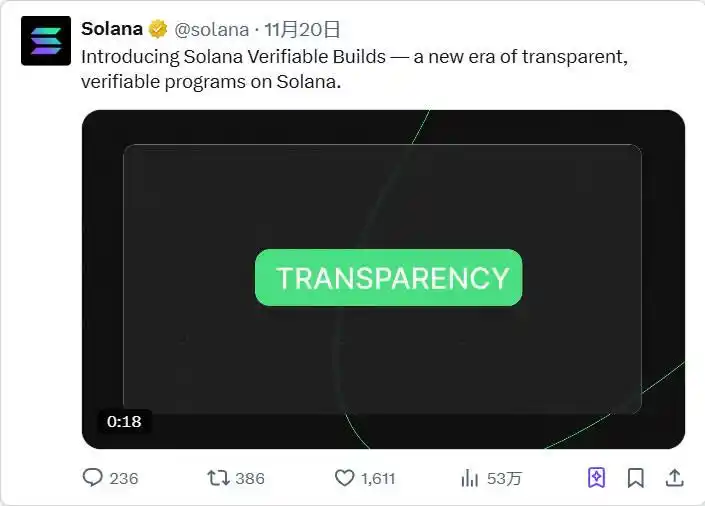
· Insufficient number of Verified builds
· Lack of high-information-value interactions on platforms like Stack Overflow
· Historically rapid development of Solana infrastructure, meaning that code written even 6 months ago may not be entirely suitable for today's needs
· Lack of an evaluation model for understanding the level of Solana comprehension
The Foundation would like to see
· Help in acquiring better Solana data on the internet
· More teams releasing Verified builds
· More people in the ecosystem actively asking good questions and providing high-quality answers on Stack Exchange
· Creation of high-quality benchmarks for evaluating LLMs' understanding of Solana (RFP coming soon)
· Development of LLM fine-tuned models that perform well in the aforementioned benchmark tests, and more importantly, accelerate the efficiency of Solana developers. Once high-quality benchmarks are in place, the Foundation may incentivize the first model to reach the benchmark threshold score
The ultimate significant achievement will be: a brand-new, high-quality, differentiated Solana validator node client created entirely by AI.
3. Supporting an Open and Decentralized AI Tech Stack
In the field of AI, the long-term power balance between open-source and closed-source models remains unclear. Indeed, there are arguments supporting closed entities that will continue to lead the technological frontier and capture the primary value of foundational models. The simplest current expectation is to maintain the status quo—tech giants like OpenAI and Anthropic driving cutting-edge developments, while open-source models rapidly catch up and gain unique advantages through fine-tuning in specific application scenarios.
The Foundation is committed to closely integrating Solana with the open-source AI ecosystem. Specifically, this means supporting access to the following elements:
· Training Data
· Training and Inference Compute Power
· Model Weights
· Model Output Verification Capability
The significance of this strategy is reflected in:
1. Open-Source Models Accelerating Innovation Iteration
The rapid improvement and fine-tuning of open-source models like Llama by the open-source community demonstrate how the community effectively complements the work of large AI companies, pushing the boundaries of AI capabilities (even a Google researcher noted last year, "We don't have a moat about open source, nor does OpenAI"). The Foundation believes that a thriving open-source AI technology stack is crucial to accelerating progress in this field.
2. Providing Choice for Users of Trustless AI
AI may be the most potent tool in the arsenal of autocratic or authoritarian regimes. Nationally recognized models offer an officially sanctioned "truth" and are a significant vehicle of control. Highly authoritarian regimes may have superior models because they are willing to disregard citizen privacy to train AI. The use of AI for control is an inevitable trend, and the Foundation hopes to be proactive and fully support the open-source AI technology stack.
Several projects in the Solana ecosystem are already supporting the open AI technology stack:
· Data Collection — Grass and Synesis One are advancing data collection
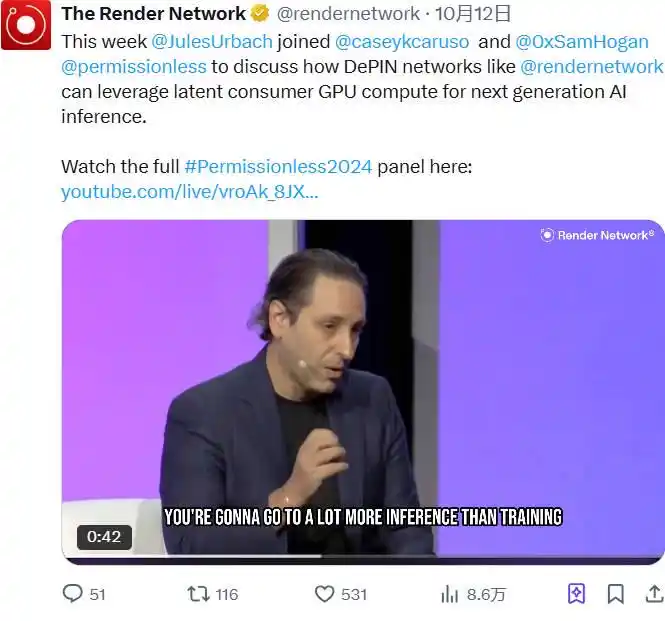
· Decentralized Compute Power — kuzco, Render Network, io.net, Bless Network, Nosana, and others
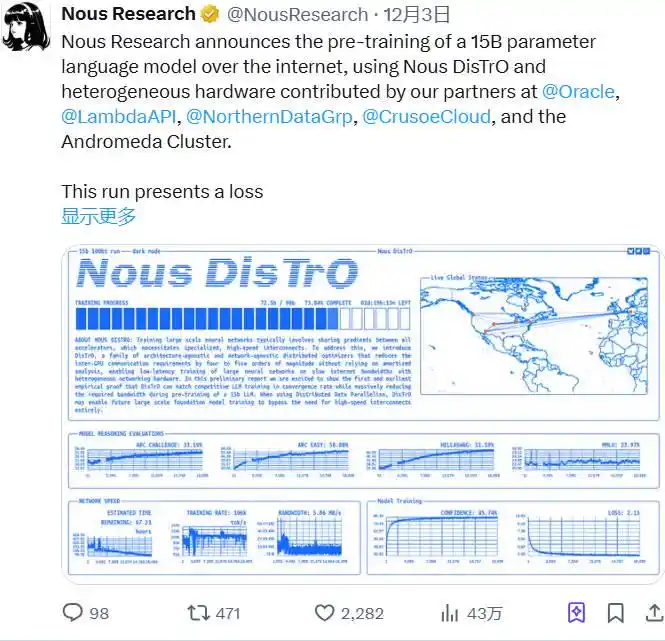
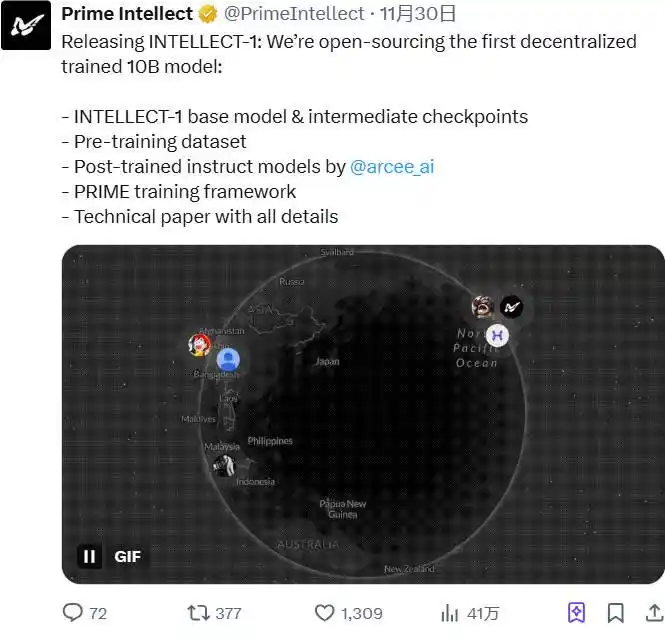
· Decentralized Training Frameworks — Nous Research, Prime Intellect
The Foundation Looks Forward To
Hoping to see more products built at various levels of the open-source AI technology stack:
· Decentralized Data Collection: e.g., Grass, Datahive, Synesis One
· On-Chain Identity: Supporting protocols that validate wallet-held identities, protocols that validate AI API responses, enabling users to confirm they are interacting with LLM
· Decentralized Training: Projects such as EXO Labs, Nous Research, and Prime Intellect
· IP Infrastructure: Allowing AI to license (and pay for) the content it uses
You may also like

New York Proposes Stricter Stablecoin Issuer Rules Aligned With Federal GENIUS Act
NYDFS proposed stricter stablecoin issuer rules aligned with the GENIUS Act, covering reserves, custody, redemption timelines, audits, and capital buffers.

Every exchange is a "Universal Exchange."

The counterattack of traditional finance: Alliance chains are quietly reviving

CryptoQuant Says Bitcoin Profitable Supply Is Near 45% Pressure Zone as On-Chain Data Points to Market Repricing
CryptoQuant said Bitcoin’s profitable supply is nearing the 45% pressure zone, signaling rising market stress, unrealized losses, and a possible on-chain repricing phase.

Bitcoin Falls Below 200-Week Moving Average as On-Chain Data Shows Over Half of Supply in Loss
Bitcoin dropped below its 200-week moving average as on-chain data showed over 50% of circulating supply is now in loss, signaling rising market stress.

CFTC Reportedly Plans New Prediction Market Rules Focused on Manipulation Risk and Public Interest Review
The CFTC is reportedly preparing new prediction market rules focused on manipulation risk, public interest review, and retail trader protections.

Meet the new WEEX trial fund—your gateway to greater profits

WEEX Labs Lands at Dutch Blockchain Week: A Disruptive Crypto × AI Conversation Sets Sail in Amsterdam

SK Hynix Reportedly Plans U.S. ADR Listing as Early as August, With SEC Approval Possible in Late June
SK Hynix may pursue a U.S. ADR listing as early as August, with SEC approval reportedly possible in late June amid strong AI chip supply chain demand.

SpaceX vs Tesla vs xAI: Which Elon Musk Trade Has the Biggest Upside in 2026?
OpenAI Reveals It Has Confidentially Submitted an S-1 to the SEC, Keeping the Door Open for a Future IPO
On June 9, according to an OpenAI announcement, the company recently confidentially submitted a draft S-1 registration statement to the U.S. Securities and Exchange Commission (SEC), beginning the preliminary compliance process for a potential initial public offering. OpenAI said it chose to disclose this proactively because it expected the news might leak; however, the company has not yet set a specific listing timeline, and related arrangements may still take some time.

Latest research from 13 top universities including Cornell University: The current state, challenges, and misconceptions of the fusion of Crypto and AI
Deconstructing Anthropic: The Best AI Company, Possibly Also a Type of Organizational Invention
Apollo and Blackstone Reportedly Back $35 Billion Anthropic Chip Financing as Deal Details Remain Unclear
On June 9, according to currently available news alerts, Apollo and Blackstone Group participated in a $35 billion financing for an Anthropic “chip project.” Based on the original wording of the report, the funding has already been raised, but public information remains limited. The financing structure, use of proceeds, project entity, and whether Apollo and Blackstone participated through equity, debt, or project financing have not yet been disclosed.

Humanity Protocol Security Incident Escalates: More Than $31 Million Stolen From Related Addresses as Attacker Continues Selling H for ETH
On June 9, according to monitoring by Onchain Lens, more than $31 million has been stolen from addresses linked to Humanity Protocol, and the attack is still ongoing, with the hacker continuously swapping H tokens for ETH. Project founder Terence Kwok later confirmed the security incident on X, saying the issue involved a private key leak.

Bloomberg: As Bitcoin Weakens, Stablecoins and RWA Continue to Drive Expansion in Crypto Businesses
In June, Bloomberg reported that despite Bitcoin falling below $60,000 last week, wiping out about $235 billion in market value within seven days, and dropping close to 50% from last year’s peak, some core businesses in the crypto industry are still expanding, mainly in stablecoins, real-world asset tokenization (RWA), payments, and infrastructure. The report also noted that overall altcoin activity has contracted significantly: altcoin market capitalization has fallen from a peak of about $431 billion in November 2021 to around $170 billion, and among the tens of millions of tokens issued in recent years, fewer than 1,700 still maintain meaningful trading activity.

Galaxy Deep Research Report: How Hyperliquid's HIP-4 Upgrade Changes the Landscape of Prediction Markets?
Binance Research: RWA Market Expected to Expand Nearly 6x from Early 2025, with Public Equities and Onchain Payments Heating Up Together
In June, Binance Research said in its monthly market report that the real-world asset (RWA) market is expected to grow by about 589% from the beginning of 2025. Bond- and money market fund-related RWA expanded by about $6.5 billion, up 83% year over year, while publicly traded equity RWAs grew by about 422%. The report also noted that monthly crypto debit card transaction volume exceeded $747 million in May, up 48.6% year to date.
New York Proposes Stricter Stablecoin Issuer Rules Aligned With Federal GENIUS Act
NYDFS proposed stricter stablecoin issuer rules aligned with the GENIUS Act, covering reserves, custody, redemption timelines, audits, and capital buffers.
Every exchange is a "Universal Exchange."
The counterattack of traditional finance: Alliance chains are quietly reviving
CryptoQuant Says Bitcoin Profitable Supply Is Near 45% Pressure Zone as On-Chain Data Points to Market Repricing
CryptoQuant said Bitcoin’s profitable supply is nearing the 45% pressure zone, signaling rising market stress, unrealized losses, and a possible on-chain repricing phase.
Bitcoin Falls Below 200-Week Moving Average as On-Chain Data Shows Over Half of Supply in Loss
Bitcoin dropped below its 200-week moving average as on-chain data showed over 50% of circulating supply is now in loss, signaling rising market stress.
CFTC Reportedly Plans New Prediction Market Rules Focused on Manipulation Risk and Public Interest Review
The CFTC is reportedly preparing new prediction market rules focused on manipulation risk, public interest review, and retail trader protections.


