
Over 50% growth for 3 consecutive days, where does the growth potential of $ALCH come from?


Original Authors: crypto_ace3, jungAIalch, Crypto Kol
Original Translators: zhouzhou, BlockBeats
Editor's Note: This article introduces some features and uses of the Alchemist AI platform, discusses the key role of network effects in the success of the digital marketplace, especially in the development process of alchemistAIapp (ALCH), where the platform can form a self-enhancing growth flywheel by attracting developers and users, while ALCH possesses characteristics of a two-sided market and a social network.
Below is the original content (reorganized for better readability):
Alchemist AI is a no-code platform that allows users to build software applications by simply providing descriptions. Without the need for coding skills, anyone (from beginners to experts) can quickly create custom applications, utilities, and games.
The key technical components of Alchemist AI include User Input Processing, which is responsible for handling user interaction with the platform, ensuring the system correctly understands and interprets the user's text, commands, or data input, preparing for subsequent operations. Next, App Logic Generation translates user input into the logic or structure that drives the application's functionality, ensuring that the generated application can perform the required tasks.
Core Features
Subsequently, Code Generation and Deployment convert the application logic into actual code and deploy the generated application for user operation. Finally, the Operating System API Integration (limited access) integrates the generated application with the underlying operating system's API set, providing the necessary system-level functionality to the application, but with limited access rights.
Alchemist AI's technical process is like a magic ritual, extracting intent from the user's simple description, such as "build a timer" or "create a meteor game." Through natural language processing, the system deeply understands every detail, identifying the user's needs and constraints. Then, Alchemist AI translates these requirements into backend logic, builds algorithms, processes events, and designs user interface behaviors that align with the intent. As the input transforms into code, the platform converts natural language instructions into HTML, CSS, and JavaScript, forming the skeleton of a web application.
The generated application is presented in a sandbox environment, through an iframe or a similar web environment, allowing users to interact with it directly in the browser and conduct testing. For applications that require deep interaction with the local environment, Alchemist AI securely provides access to system functions through limited Operating System API integration, such as file storage or hardware interfaces, ensuring that each generated application can find a perfect balance between the virtual and the real.
Alchemist AI offers a range of powerful features, including image generation and seamless integration of multiple AI systems, providing users with a diverse creative experience.

The platform supports third-party APIs and personal API keys, allowing users to flexibly extend functionality and perform personalized operations.
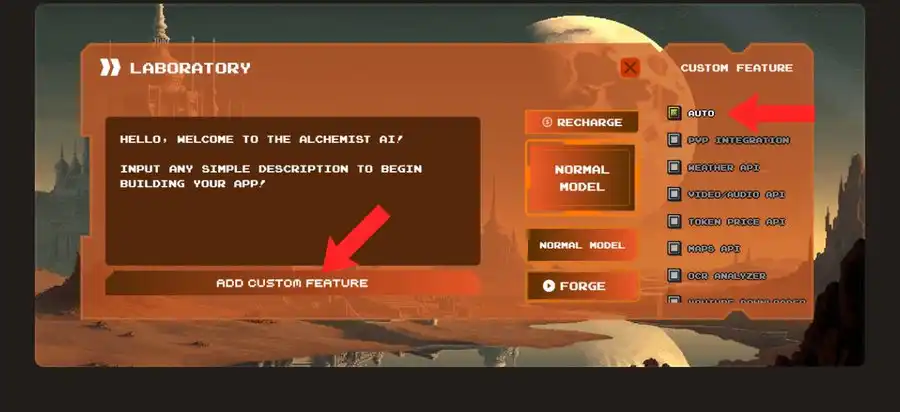
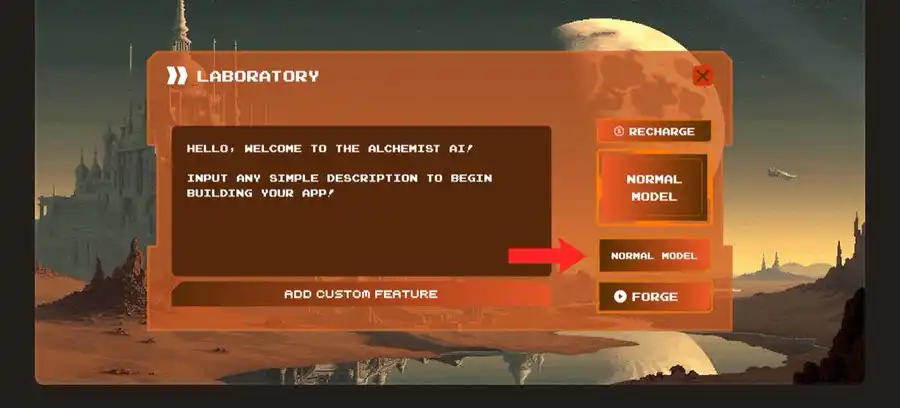
The unique "AI within AI" architecture enables the system to have stronger learning and adaptation capabilities, while multiplayer game and multilingual support allow global users to enjoy interactive and entertaining experiences. The Advanced Mode offers professional-level custom services, the folder system facilitates file organization and management for users, and the Forge version rollback feature ensures that the ideal version can be restored in any situation. All these features together constitute a flexible, efficient, and deep innovative platform.
Alchemist AI offers various powerful features, including support for personal API keys, where users can access advanced services by adding their private API keys to create custom applications. Users can also leverage the AI within AI functionality to create applications with integrated AI tools that provide dynamic AI-driven capabilities.
Furthermore, the platform supports a multi-tool environment, allowing hosting multiple AI tools in one application to meet various needs, and provides a custom AI assistant feature that enables users to train their own assistants. For multiplayer game development, Alchemist AI streamlines player connections, real-time synchronization, and cross-device support to ensure a seamless gaming experience. Finally, the Advanced Mode offers subscribers faster processing speeds, exclusive features, and additional resources to help users turn complex creative projects into reality.
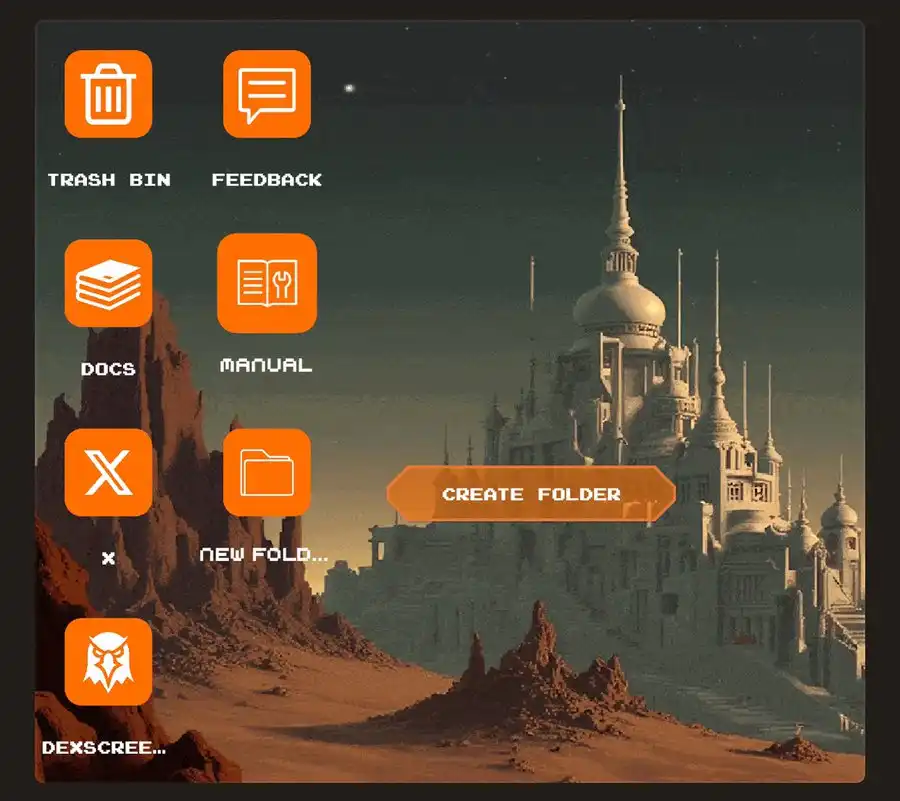
Through the folder system, users can easily organize applications for efficient management and navigation, ensuring projects are well-structured; simply right-click on the main screen to create a folder.
Network Effects
We will delve into the importance of 'network effects' and its core role in shaping the trajectory of ALCH (alchemistAIapp) in the future.
The network effect plays a crucial role in the success of digital marketplaces. The Google Play Store is a prime example of this phenomenon, and understanding this is also helpful in contrasting Alch with its pseudo peers (e.g., virtuals io).
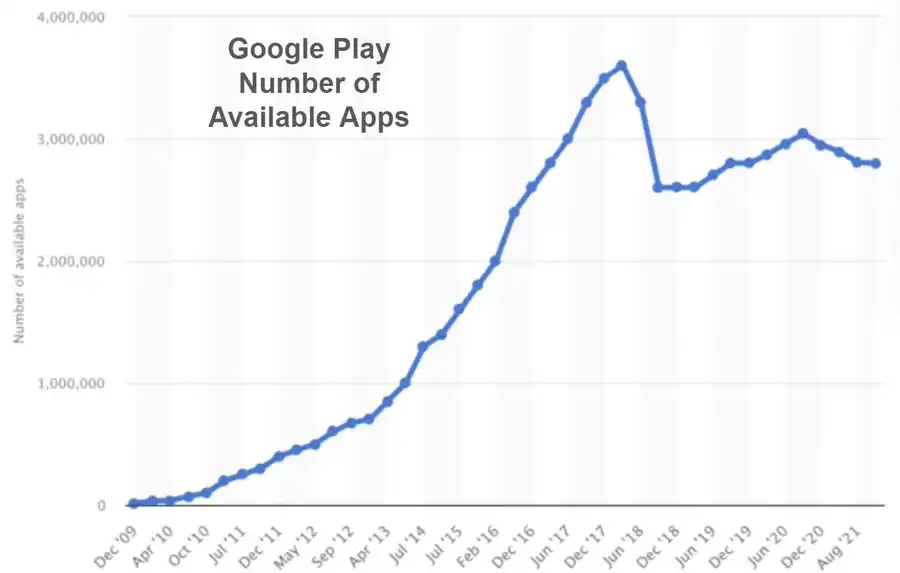
The network effect occurs when the value of a product or service increases as more people use it, creating a self-reinforcing cycle of growth and adoption.
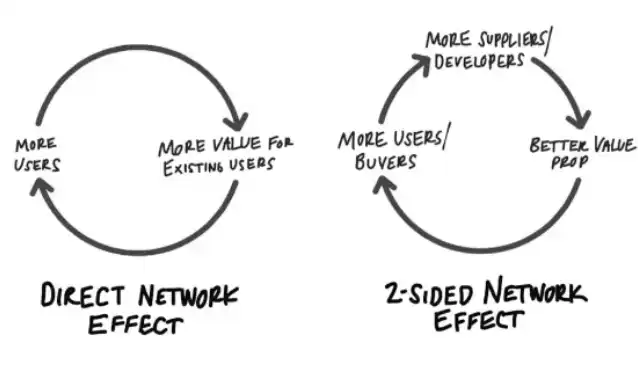
For digital marketplaces like alchemistAIapp, we can observe a "two-sided network effect," where attracting developers → drives more apps → attracts more users → attracts more developers, and so on.
What sets ALCH apart is that its users are also "developers" since it provides a no-code environment. This makes it both a one-sided marketplace and a two-sided marketplace! Therefore, ALCH can also benefit from the one-sided network effect of social networks.
In other words, ALCH combines the characteristics of a social network and an app store—and has low-friction app development capabilities. Let's pause for a moment and consider its potential.
However, I also want to point out clearly that this advantage may eventually become ALCH's Achilles' heel. Since apps developed by ordinary users usually have lower utility, the market may ultimately be flooded with mediocre, limited-utility apps, leading to a "long tail effect."
We need to remember that the early stages of market development are crucial, and the emergence of "killer apps" is essential to kickstarting the network effect. This stage can be understood as the "market formation" phase.
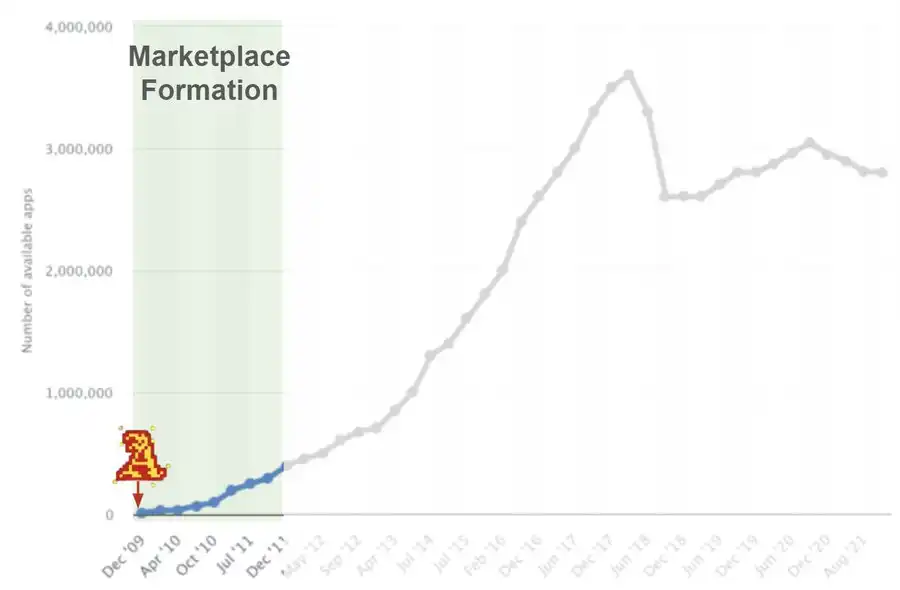
At this stage, what is most important is the emergence of virally spreadable apps as standout applications—those that act as catalysts for user adoption. Google Play went through this process, with early hit apps like "Angry Birds" helping ignite its expansion phase.
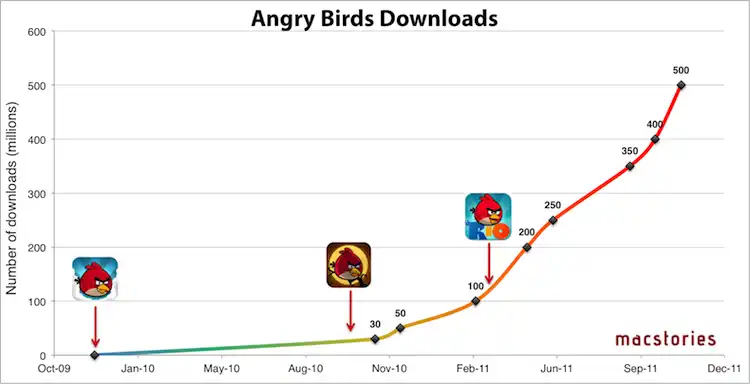
Returning to the topic of alchemistAIapp: a core strategic task will be to accelerate the development of catalytic "killer apps"—the future ALCH version of "Angry Birds"—to kickstart its expansion phase.
For comparison, AIXBT is emerging on virtualsio, becoming a potential "killer app" — and is starting to engage the critical flywheel of attracting users and activating a developer ecosystem.
Notably, the addressable market size of ALCH from alchemistAIapp is much larger than that of virtualsio, potentially reaching billions of users, although the current addressable market is primarily focused on crypto-native users. Its potential is significant.
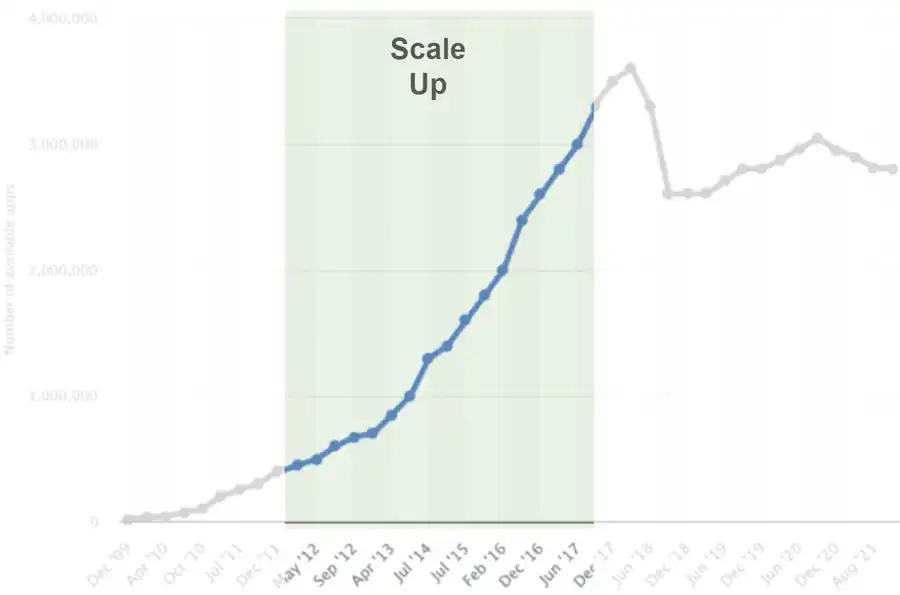
Once ALCH releases its first wave of killer apps, the expansion phase may focus on aggressive marketing strategies, refining incentive mechanisms, introducing new revenue models, expanding distribution channels, and onboarding power developers onto the platform.
Sources: https://x.com/crypto_ace3/status/1874560245437182333
https://x.com/jungAIalch/status/1872778191728959583
You may also like

Pantera Capital Partner: How Tokenization is Restructuring the Private Equity and Early Investment Ecosystem?

New York Proposes Stricter Stablecoin Issuer Rules Aligned With Federal GENIUS Act
NYDFS proposed stricter stablecoin issuer rules aligned with the GENIUS Act, covering reserves, custody, redemption timelines, audits, and capital buffers.
Every exchange is a "Universal Exchange."

The counterattack of traditional finance: Alliance chains are quietly reviving

CryptoQuant Says Bitcoin Profitable Supply Is Near 45% Pressure Zone as On-Chain Data Points to Market Repricing
CryptoQuant said Bitcoin’s profitable supply is nearing the 45% pressure zone, signaling rising market stress, unrealized losses, and a possible on-chain repricing phase.

Bitcoin Falls Below 200-Week Moving Average as On-Chain Data Shows Over Half of Supply in Loss
Bitcoin dropped below its 200-week moving average as on-chain data showed over 50% of circulating supply is now in loss, signaling rising market stress.

CFTC Reportedly Plans New Prediction Market Rules Focused on Manipulation Risk and Public Interest Review
The CFTC is reportedly preparing new prediction market rules focused on manipulation risk, public interest review, and retail trader protections.

Meet the new WEEX trial fund—your gateway to greater profits

WEEX Labs Lands at Dutch Blockchain Week: A Disruptive Crypto × AI Conversation Sets Sail in Amsterdam

SK Hynix Reportedly Plans U.S. ADR Listing as Early as August, With SEC Approval Possible in Late June
SK Hynix may pursue a U.S. ADR listing as early as August, with SEC approval reportedly possible in late June amid strong AI chip supply chain demand.

SpaceX vs Tesla vs xAI: Which Elon Musk Trade Has the Biggest Upside in 2026?
OpenAI Reveals It Has Confidentially Submitted an S-1 to the SEC, Keeping the Door Open for a Future IPO
On June 9, according to an OpenAI announcement, the company recently confidentially submitted a draft S-1 registration statement to the U.S. Securities and Exchange Commission (SEC), beginning the preliminary compliance process for a potential initial public offering. OpenAI said it chose to disclose this proactively because it expected the news might leak; however, the company has not yet set a specific listing timeline, and related arrangements may still take some time.

Latest research from 13 top universities including Cornell University: The current state, challenges, and misconceptions of the fusion of Crypto and AI
Deconstructing Anthropic: The Best AI Company, Possibly Also a Type of Organizational Invention
Apollo and Blackstone Reportedly Back $35 Billion Anthropic Chip Financing as Deal Details Remain Unclear
On June 9, according to currently available news alerts, Apollo and Blackstone Group participated in a $35 billion financing for an Anthropic “chip project.” Based on the original wording of the report, the funding has already been raised, but public information remains limited. The financing structure, use of proceeds, project entity, and whether Apollo and Blackstone participated through equity, debt, or project financing have not yet been disclosed.

Humanity Protocol Security Incident Escalates: More Than $31 Million Stolen From Related Addresses as Attacker Continues Selling H for ETH
On June 9, according to monitoring by Onchain Lens, more than $31 million has been stolen from addresses linked to Humanity Protocol, and the attack is still ongoing, with the hacker continuously swapping H tokens for ETH. Project founder Terence Kwok later confirmed the security incident on X, saying the issue involved a private key leak.

Bloomberg: As Bitcoin Weakens, Stablecoins and RWA Continue to Drive Expansion in Crypto Businesses
In June, Bloomberg reported that despite Bitcoin falling below $60,000 last week, wiping out about $235 billion in market value within seven days, and dropping close to 50% from last year’s peak, some core businesses in the crypto industry are still expanding, mainly in stablecoins, real-world asset tokenization (RWA), payments, and infrastructure. The report also noted that overall altcoin activity has contracted significantly: altcoin market capitalization has fallen from a peak of about $431 billion in November 2021 to around $170 billion, and among the tens of millions of tokens issued in recent years, fewer than 1,700 still maintain meaningful trading activity.

Galaxy Deep Research Report: How Hyperliquid's HIP-4 Upgrade Changes the Landscape of Prediction Markets?
Pantera Capital Partner: How Tokenization is Restructuring the Private Equity and Early Investment Ecosystem?
New York Proposes Stricter Stablecoin Issuer Rules Aligned With Federal GENIUS Act
NYDFS proposed stricter stablecoin issuer rules aligned with the GENIUS Act, covering reserves, custody, redemption timelines, audits, and capital buffers.
Every exchange is a "Universal Exchange."
The counterattack of traditional finance: Alliance chains are quietly reviving
CryptoQuant Says Bitcoin Profitable Supply Is Near 45% Pressure Zone as On-Chain Data Points to Market Repricing
CryptoQuant said Bitcoin’s profitable supply is nearing the 45% pressure zone, signaling rising market stress, unrealized losses, and a possible on-chain repricing phase.
Bitcoin Falls Below 200-Week Moving Average as On-Chain Data Shows Over Half of Supply in Loss
Bitcoin dropped below its 200-week moving average as on-chain data showed over 50% of circulating supply is now in loss, signaling rising market stress.


