
How to Make Money Through the Agent Economy in 2025?



Original Article Title: How to make fucking $$ in the Agentic Economy 2025
Original Article Author: Foxi_xyz, Crypto KOL
Original Article Translation: zhouzhou, BlockBeats
Editor's Note: This article explores the future development of the agent economy, especially the evolution of AI agents. From Stage 1's simple chatbots, to Stage 2's integration of privacy and DeFi, and on to Stage 3's collaboration between agents, it emphasizes the critical role of infrastructure, frameworks, and technology. While the current market is filled with simple social media agents, the real opportunity lies in the technology and platforms that support autonomous economic activity.
The following is the original content (slightly reorganized for better readability):
"Agents are not just here to snatch your Twitter feed—they are reshaping the entire digital economy."
In this article, we will delve into how to discover the next AIagentAlpha by fully understanding the methodology behind it. Remember, once everyone sees it, it's no longer Alpha. The key is to stay two steps ahead by applying this methodology, and you will succeed.
The Golden Rule: Consensus
I'll dump on your bags, you'll dump on others. We're all here to make money, so you should never really "marry" your investment bag. Your task is to find the right time to dump it. To dump these shitcoins onto others, you need to find a project with "consensus." This means you are likely to find your exit liquidity.
How to make money?
Predict an emerging trend (consensus) with strong conviction.
Invest in potential gems, ensuring they have enough legitimacy and innovation.
When consensus forms, sell your bags to others.
The next article will focus on the hardest part: prediction.
If you have nothing in your head, or no personal belief in this trend, then you cannot invest in potential gems by yourself. Either you rely entirely on luck, or wait for someone to call you, waiting for KOLs to dump you again. Let's get started.
1. The Three Waves of Agent Evolution
While 2024 was defined by AI breakthroughs such as OpenAI's o1 and multi-billion dollar valuations, 2025 will be the year of AI's financialization. But in this rapidly evolving environment, the key to discovering true value is to move beyond the "AIagent" hype and understand the foundational shifts taking place.
Understanding our position in the adoption cycle is crucial for identifying opportunities. The agent economy is unfolding in three distinct stages:
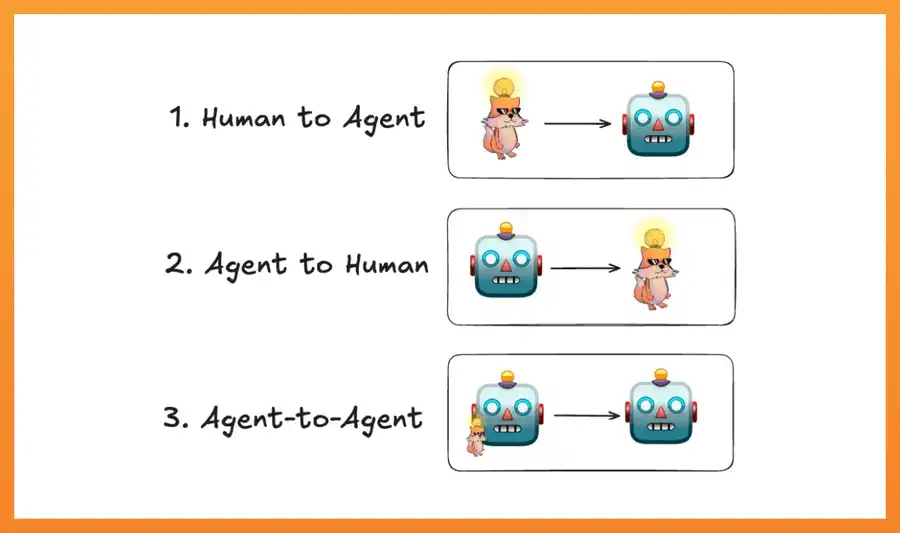
First Wave: Human to Agent (Current)
We are currently in this stage—imagine the simple chatbot interactions you see with an X (aixbt agent), where these agents primarily act as research assistants and execute human intents. While valuable, they do not require a revolutionary infrastructure change. Right now, most agents look like customized ChatGPT, helping you with simple research. These agents do not have high autonomy. They cannot independently manage resources, take on risks, or pay for other services.
Second Wave: Agent to Human (Emerging)
This is where it gets interesting, AI agents start handling daily tasks autonomously—such as executing trading strategies, optimizing home energy usage, or negotiating and paying bills—without requiring constant intervention from you. Although tools like Stripe's Agent SDK can cover some scenarios, they also foreshadow a larger shift: you will no longer pay fixed monthly or yearly fees but see a more granular pay-as-you-go model.
As agents take on more responsibilities, they need to cover computation power, per-query API costs, model inference costs, etc.—anytime, anywhere. These small-scale on-demand transactions quickly expose the limitations of existing payment systems since these systems were not designed to support real-time micropayments. This is where cryptocurrencies can come into play, providing faster settlements, lower fees, and a more flexible way to better address these new demands compared to traditional systems.
Some on-chain examples may include:
Automated trading systems
Yield optimization
Asset portfolio rebalancing
Third Wave: Agent to Agent/Cooperation (Future)
This is where the biggest opportunity lies. We have seen some early experiments where projects like Terminal of Truth and Zerebro are exploring a business model of agent-to-agent, but the real potential goes far beyond social media tokens:
Resource Marketplace: Computation agents and storage agents negotiate for optimal data placement
Service Optimization: Database agents and computation agents negotiate query optimization services
Financial Service: Insurance transaction between Risk Assessment agent and Coverage agent
This stage requires infrastructure specifically designed for machine-to-machine interaction, as traditional monetary systems, with a focus on manual validation and control, prove inadequate in an economy dominated by autonomous entities. Instead, stablecoins provide a crucial framework, with their programmability, cross-border capabilities, fast transaction settlement, and promotion of microtransactions, enabling them to better address these new needs than traditional systems.
II. Deciphering the Web3 AI Stack
Delphi Digital has already made a fairly clear classification of the "decentralized AI" stack, with 6 key directions (which I believe have high potential), each of which has some "sub-industries" under it. You can consider them as narratives or innovation directions. I can guarantee that each sub-industry will have a frontrunner achieving a market capitalization of at least $5 billion in the coming months.
6 Key Directions and Notable Examples:
Application aixbt agent
Agent Enablement/Coordination of Virtuals
Privacy PhalaNetwork
AI Training/Inference Ritualnet
Computing Ionet
Data Arweave
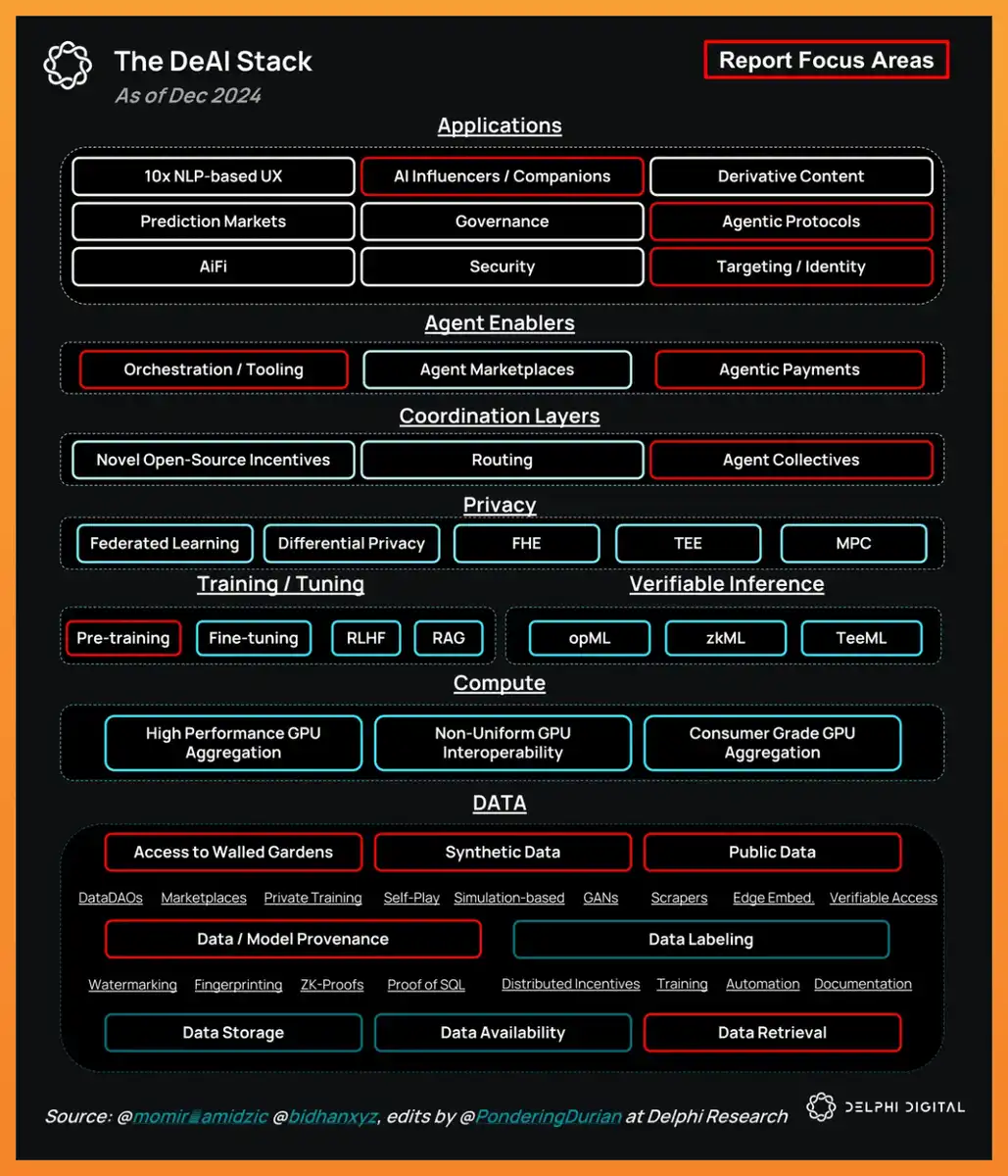
There are many sub-industries under each key direction, so I won't cover everything here. However, I anticipate a "sequence of capital inflow." This sequence will heavily depend on market maturity and development stage, and below is a visual I created:
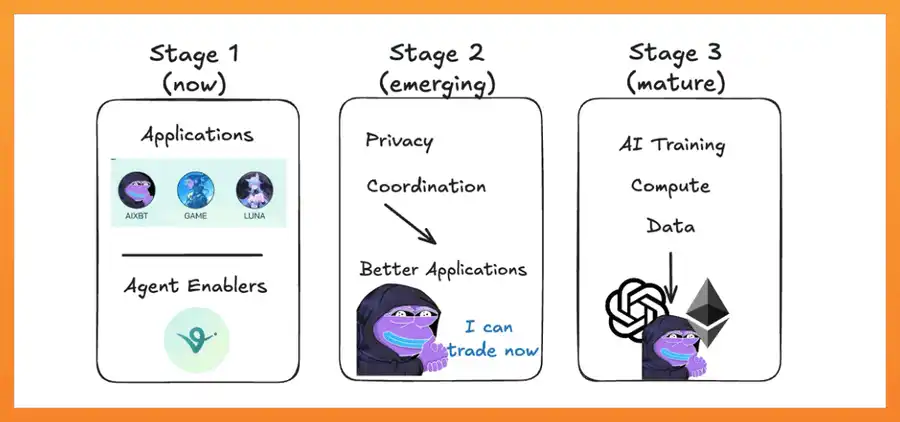
Stage 1:
We see a large number of agent launches every day, with many of them being chatbots/ChatGPT wrapped up, having very limited actual utility but serving as an interesting meme. As we know, the usefulness of a product is entirely unrelated to its valuation, so many imaginative and interesting agents will be hyped.
Agent Enablers (Launchpads) become the first-level infrastructure for agents in this stage. For example, as agents generate income through audience interaction, these funds will be used to buy back and burn tokens in the liquidity pool paired with $Virtual. This establishes a direct correlation between agent success and platform value, ensuring that the incentive mechanisms within the ecosystem remain aligned.
Phase 2:
If a narrative is reduced to spam bots on Twitter, it is no longer engaging. Therefore, we are starting to see people integrating the concept of 'privacy' into it (e.g., aipool tee and sporedotfun).
The good news is, most people do not understand technical terms like TEE, FHE, ZKP. This suddenly makes the agent application look very innovative, even if these agents may not have actually implemented TEE. However, all this is to enhance the value of agent applications and give them more 'utility.' Agents will soon venture into the DeFi/wallet space.
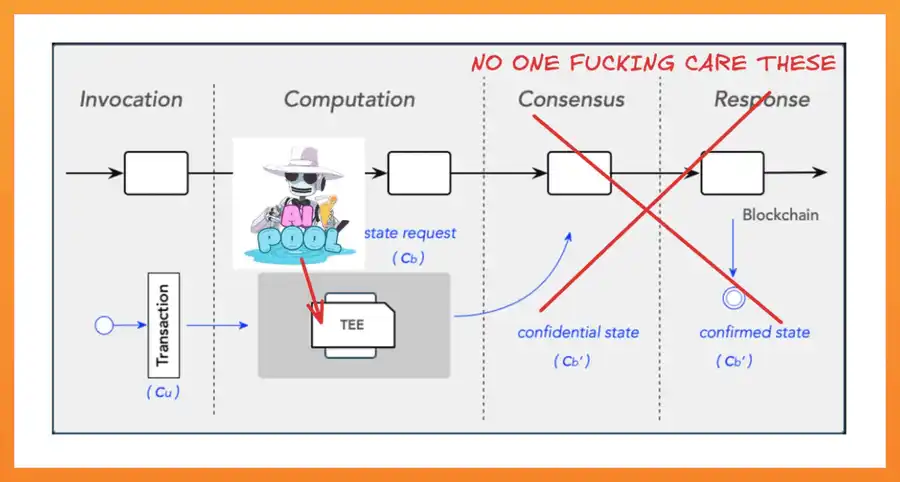
We will see agents being able to perform token swaps, cross-chain bridging, optimize trade routes, and minimize transaction fees for you, these agents will be integrated into the wallet interface.
The key is that these agents now need to compete on 'technology' rather than 'culture,' which is different from Phase 1. Therefore, you will see tokens like $BUZZ or $ACOLYT being hyped because they have a legitimate AI team or developer support (although they may still be far behind Web2's AI experts).
You will soon see: the 'AI agent wealth effect' will attract a large number of top Web2 AI developers into the Web3 space to make money, bringing many powerful AI projects. If I were you, I would probably check LinkedIn more frequently than Dexscreeners.
Phase 3:
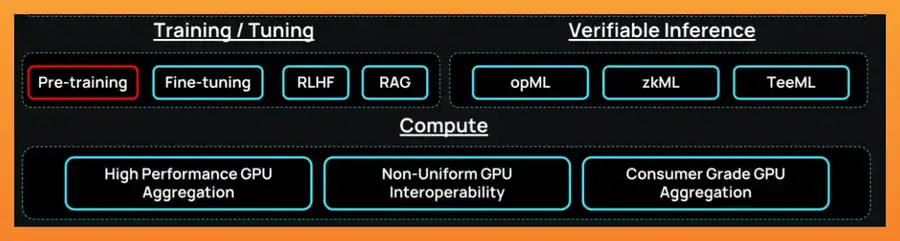
These agents will eventually mature and derive core value from AI reasoning, data, and distributed computing.
We will have TEE-based infrastructure for secure key management, a dedicated data availability (DA) layer for storing and retrieving Large Language Models (LLM) context, on-chain oracles providing trusted data feeds, zkVM framework for verifiable execution, and chain abstraction solutions.
This also means that we will access large-scale, trustless computing resources while ensuring interactions, data flows, and outputs remain verifiable and secure. At this point, advanced infrastructures like ritualnet, ionet, and StoryProtocol will transition from mere speculation to essential enablers of next-generation AI innovation.
Part 3: What Should I Invest in Now?
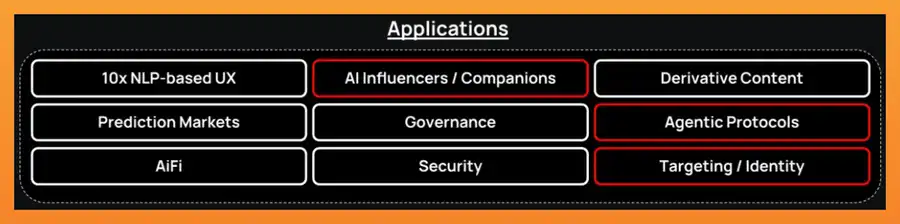
Let's revisit the overview we saw earlier:
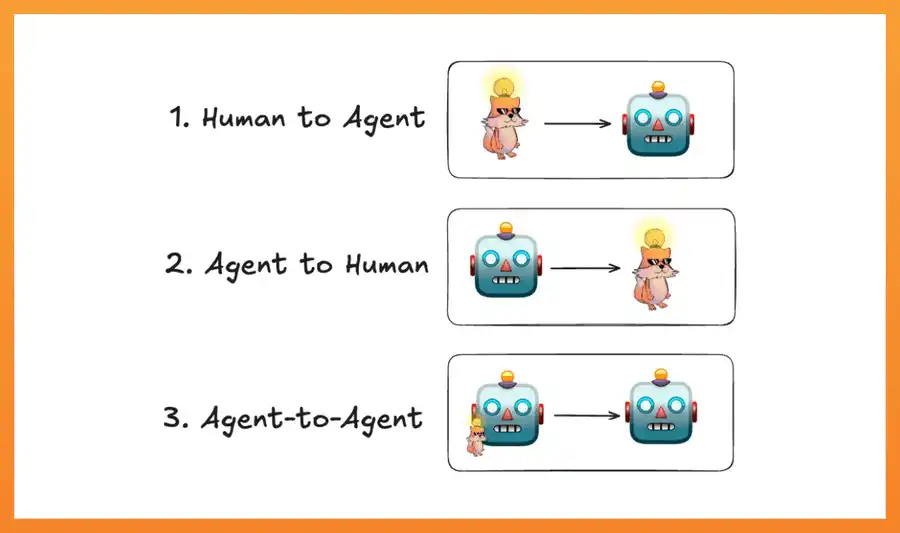
I believe we are now transitioning from Stage 1 to Stage 2. What I would be more interested in is if the agent could be "proactive" in providing real value to us, rather than just posting on Twitter or analyzing token price charts (which I can do with GPT). By "proactive" in this definition, I assume that agents can manage resources for me and make autonomous decisions. They can settle transactions independently.
Some more complex applications I would personally be interested in investing in include:
Automated trading systems
Asset portfolio rebalancing
Virtual reality
AI-based smart contracts (prediction market arbitration)
These directions may still be too broad for most people, including myself. According to our "consensus" golden rule, I observe that most of the consensus is focused on the following directions:
1. shawmakesmagic
He is the ultimate AI cult leader in this AI supercycle, just like MustStopMurad in the memecoin supercycle. Do not overlook any projects that ai16z and shaw/core ai16z members are paying attention to. The projects he focuses on and promotes are buying opportunities.
Note: "ai16z Partners," they are not always core members, I could also call myself a partner.
2. Solana Hackathon Winners
This chain is driving some projects to help you filter out promising ones. You need to be at the forefront of the market, choosing some high-quality projects. I have done this work for you, and you can check out my post. I am not an insider, so I can only judge these projects based on personal experience. You should also do some research on your own.
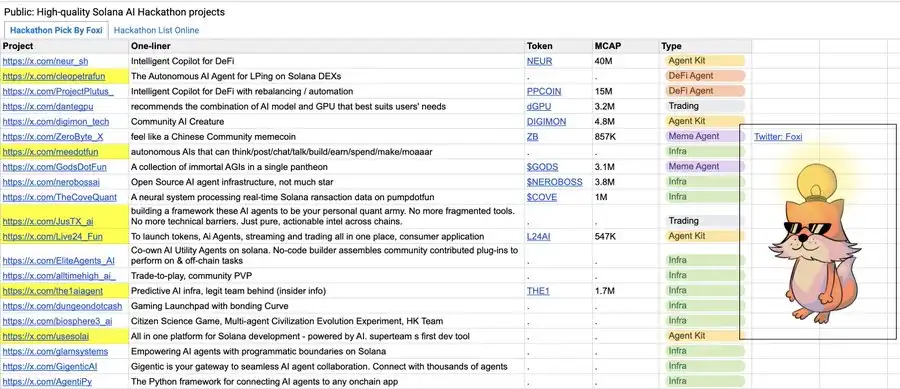
However, to actually profit from this narrative, you need tools to help you; otherwise, you will not be able to enter the market at the optimal time.
For example: AgentiPy was initially on my high-quality project list with a token. Once it launched the token, it skyrocketed to 40M, and I personally couldn't follow up in time. You need a tool to monitor this project's Twitter and enter promptly when the CA (contract address) is detected. More tutorials are coming soon.
3. AI Framework
Do you know why there are now over 500 framework layers, and why all decentralized applications (dapps) have evolved into application chains (appchains)? It's simply because of the "higher valuation" factor. Infrastructure is essentially there to provide you with more valuation space. However, not all frameworks are created equal.
You either go with the market leader, or delve into the technology and GitHub to find a "good technical infrastructure." If you can't handle these, the best choice is still to find a good entry point in $ai16z or $virtual. Don't put your SOL/ETH into a random AI scam project.
4. DeFi x AI
As mentioned above, I am bullish on the upcoming narrative of DEFAI (DeFi combined with AI). This aligns with my assumption of Stage 2 (agent to human). A good starting point is to learn through the following DeFi x AI projects and their niche areas:
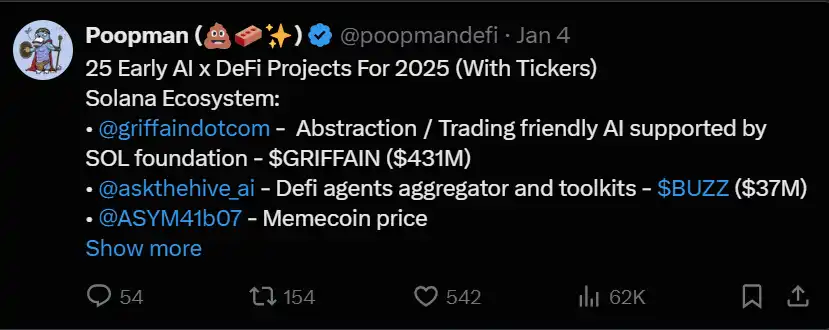
Finally, understanding these dynamics is crucial for identifying real opportunities in the agent economy.
Although the current market seems to be dominated by simple social media agents, the true value lies in the infrastructure and frameworks that will drive the next generation of autonomous economic activity. I am currently holding onto my $ai16z and $virtual tokens.
You may also like

Morning Report | OpenAI has submitted an S-1 registration statement draft to the U.S. SEC; Morpho completes $175 million financing

Galaxy Deep Research Report: How Hyperliquid's HIP-4 Upgrade Changes the Landscape of Prediction Markets?

Latest research from 13 top universities including Cornell University: The current state, challenges, and misconceptions of the fusion of Crypto and AI

Deconstructing Anthropic: The Best AI Company, Possibly Also a Type of Organizational Invention

Every exchange is a "Universal Exchange."

The counterattack of traditional finance: Alliance chains are quietly reviving
Pantera Capital Partner: How Tokenization is Restructuring the Private Equity and Early Investment Ecosystem?

Mastercard Launches Agent Pay for AI, Plans to Record AI Agent Payment Authorizations on Polygon
Mastercard launched Agent Pay for AI, a new payment protocol designed to help AI agents make small payments such as pay-per-use access to data and APIs. The system plans to record human-granted AI agent permissions on Polygon, focusing on verifiable authorization, identity, and payment controls.

Curve Deploys Llamalend v2 on Optimism With 250,000 OP Incentives
Curve launched Llamalend v2 on Optimism with 250,000 OP incentives from the Optimism Foundation. The upgrade expands Llamalend beyond its earlier crvUSD-focused model, adding broader collateral support, LlamaRisk market reviews, and the ability to use Curve LP tokens as collateral.

Raydium Old Liquidity Pool Reportedly Exploited, With $1.34 Million Moved to Ethereum and Tornado Cash
An old Raydium liquidity pool was reportedly exploited for around $1.34 million in USDC, RAY, and wSOL, with the stolen funds bridged to Ethereum and deposited into Tornado Cash. The incident highlights the tail risks of legacy DeFi pools, old contracts, and cross-chain fund laundering paths.
Kalshi Executive Challenges “SBF Backed AI Unicorns” Narrative, Says Leopold Aschenbrenner Was Key Figure
Kalshi executive John Wang questioned the “SBF backed AI unicorns” narrative, saying Leopold Aschenbrenner was the key figure behind major AI investment decisions.

New York Proposes Stricter Stablecoin Issuer Rules Aligned With Federal GENIUS Act
NYDFS proposed stricter stablecoin issuer rules aligned with the GENIUS Act, covering reserves, custody, redemption timelines, audits, and capital buffers.

CryptoQuant Says Bitcoin Profitable Supply Is Near 45% Pressure Zone as On-Chain Data Points to Market Repricing
CryptoQuant said Bitcoin’s profitable supply is nearing the 45% pressure zone, signaling rising market stress, unrealized losses, and a possible on-chain repricing phase.

Bitcoin Falls Below 200-Week Moving Average as On-Chain Data Shows Over Half of Supply in Loss
Bitcoin dropped below its 200-week moving average as on-chain data showed over 50% of circulating supply is now in loss, signaling rising market stress.

CFTC Reportedly Plans New Prediction Market Rules Focused on Manipulation Risk and Public Interest Review
The CFTC is reportedly preparing new prediction market rules focused on manipulation risk, public interest review, and retail trader protections.

Meet the new WEEX trial fund—your gateway to greater profits

WEEX Labs Lands at Dutch Blockchain Week: A Disruptive Crypto × AI Conversation Sets Sail in Amsterdam
SK Hynix Reportedly Plans U.S. ADR Listing as Early as August, With SEC Approval Possible in Late June
SK Hynix may pursue a U.S. ADR listing as early as August, with SEC approval reportedly possible in late June amid strong AI chip supply chain demand.
Morning Report | OpenAI has submitted an S-1 registration statement draft to the U.S. SEC; Morpho completes $175 million financing
Galaxy Deep Research Report: How Hyperliquid's HIP-4 Upgrade Changes the Landscape of Prediction Markets?
Latest research from 13 top universities including Cornell University: The current state, challenges, and misconceptions of the fusion of Crypto and AI
Deconstructing Anthropic: The Best AI Company, Possibly Also a Type of Organizational Invention
Every exchange is a "Universal Exchange."
The counterattack of traditional finance: Alliance chains are quietly reviving


